
Last updated September 20, 2026
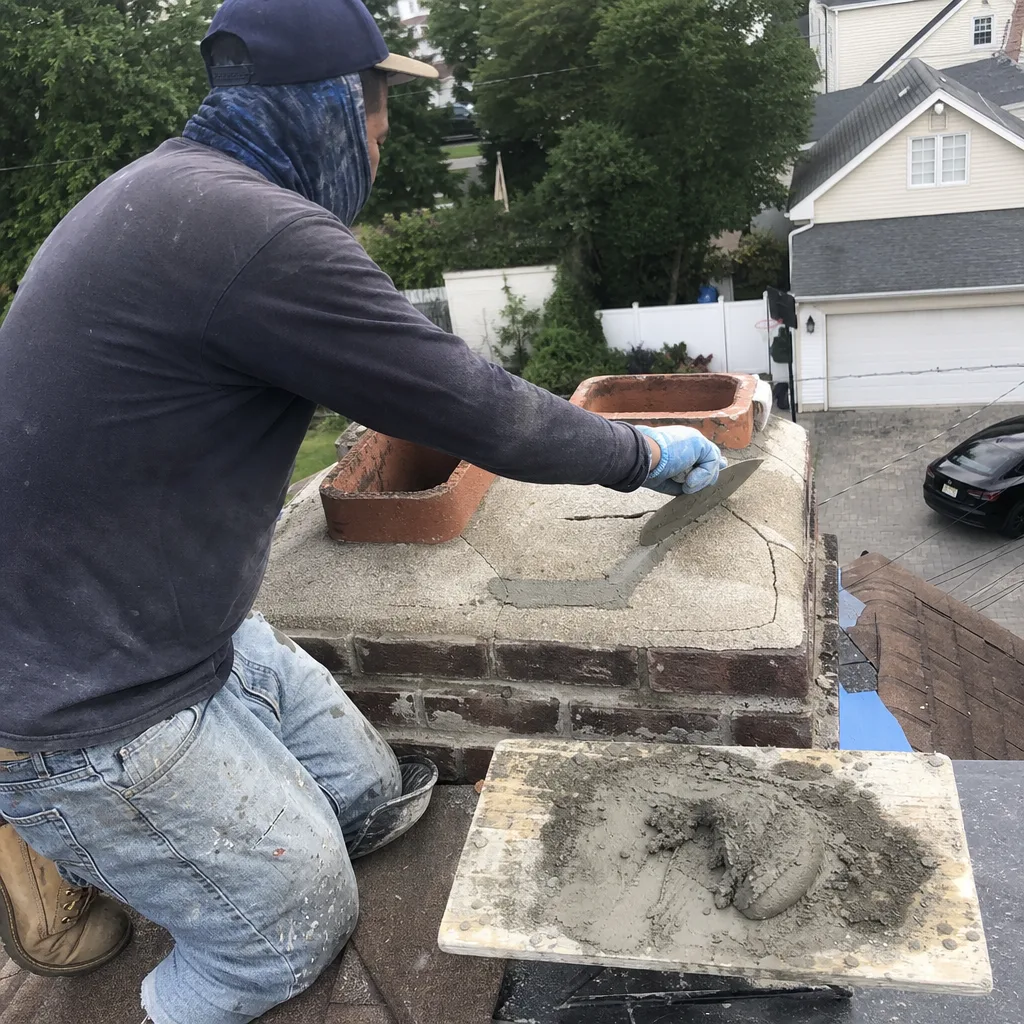
Level 1 sweep and inspection to the NFPA 211 annual standard - flue, crown, cap, and flashing checked and photographed
Chimney sweep logs do not sweep chimneys. They loosen some creosote - which then falls where a brush and vacuum still have to collect it.
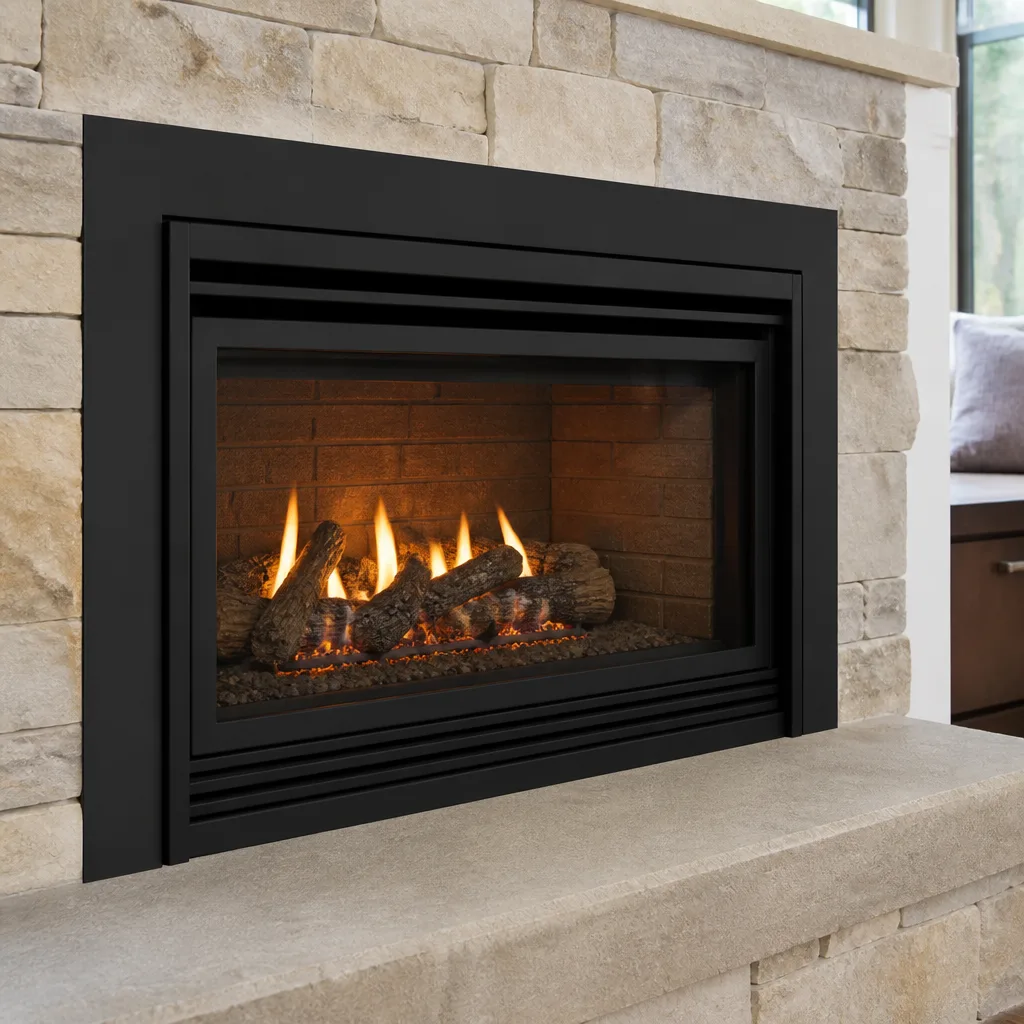
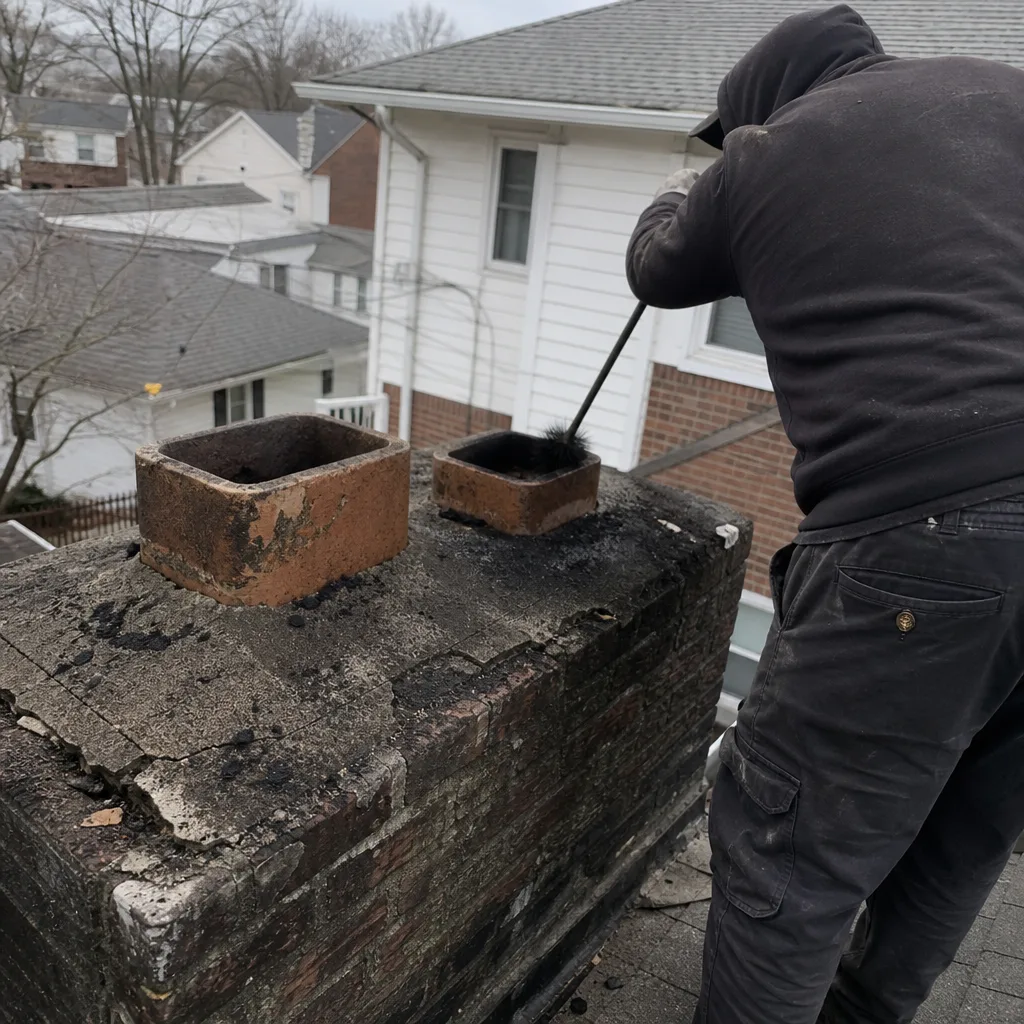 Before
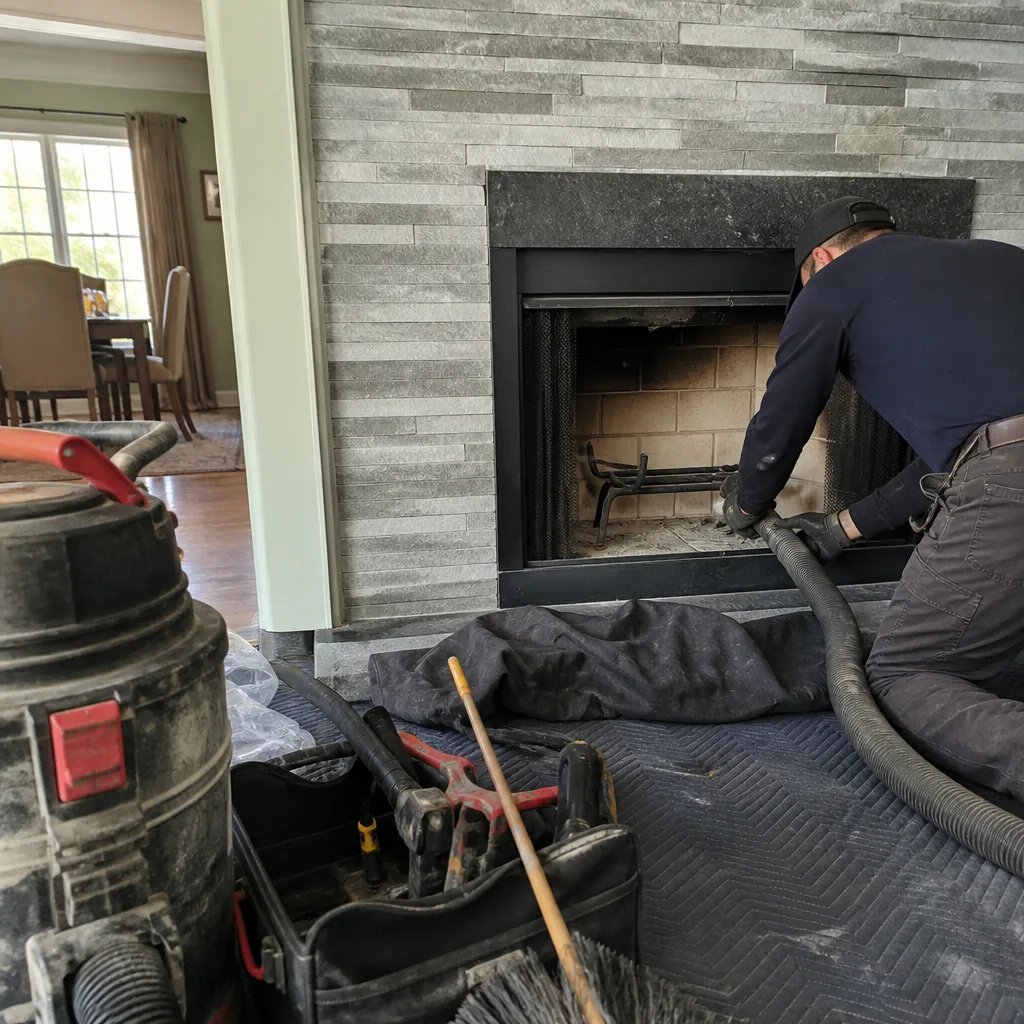 After
After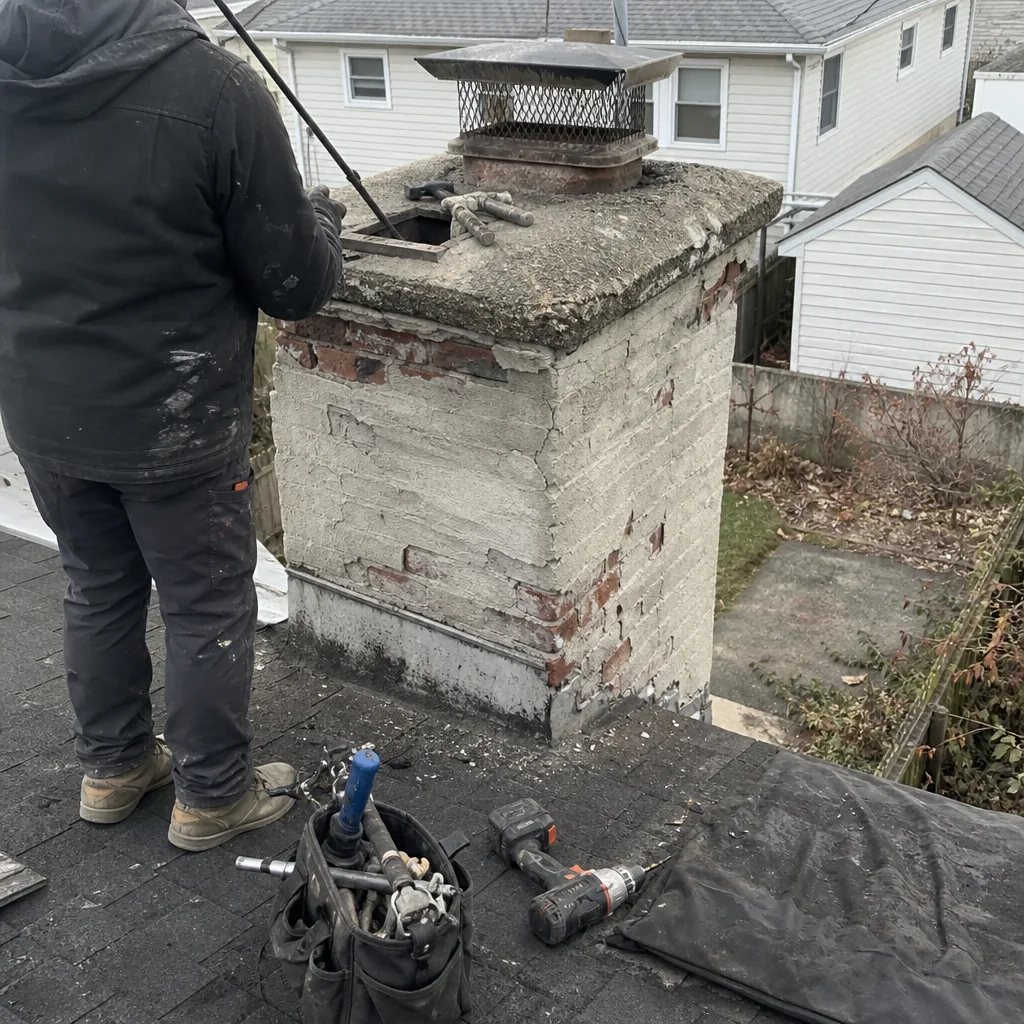 Before
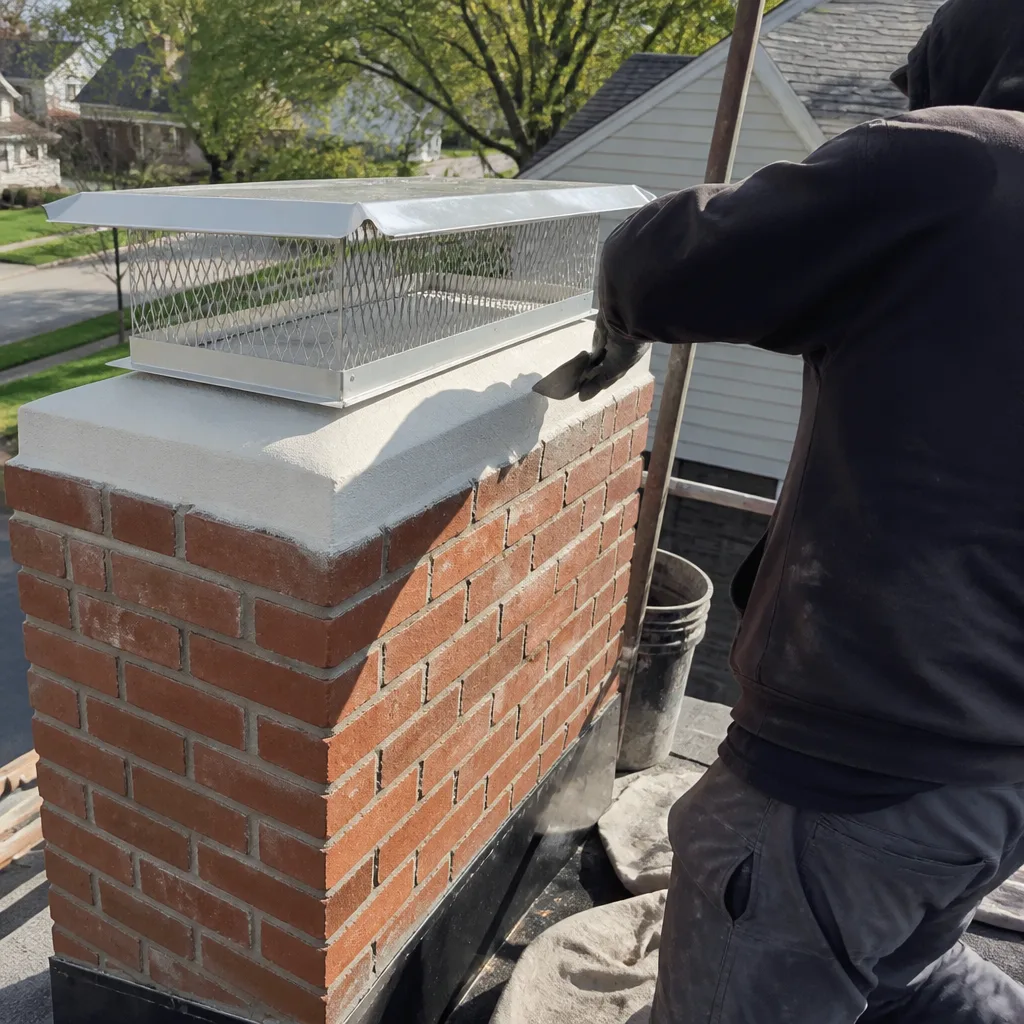 After
After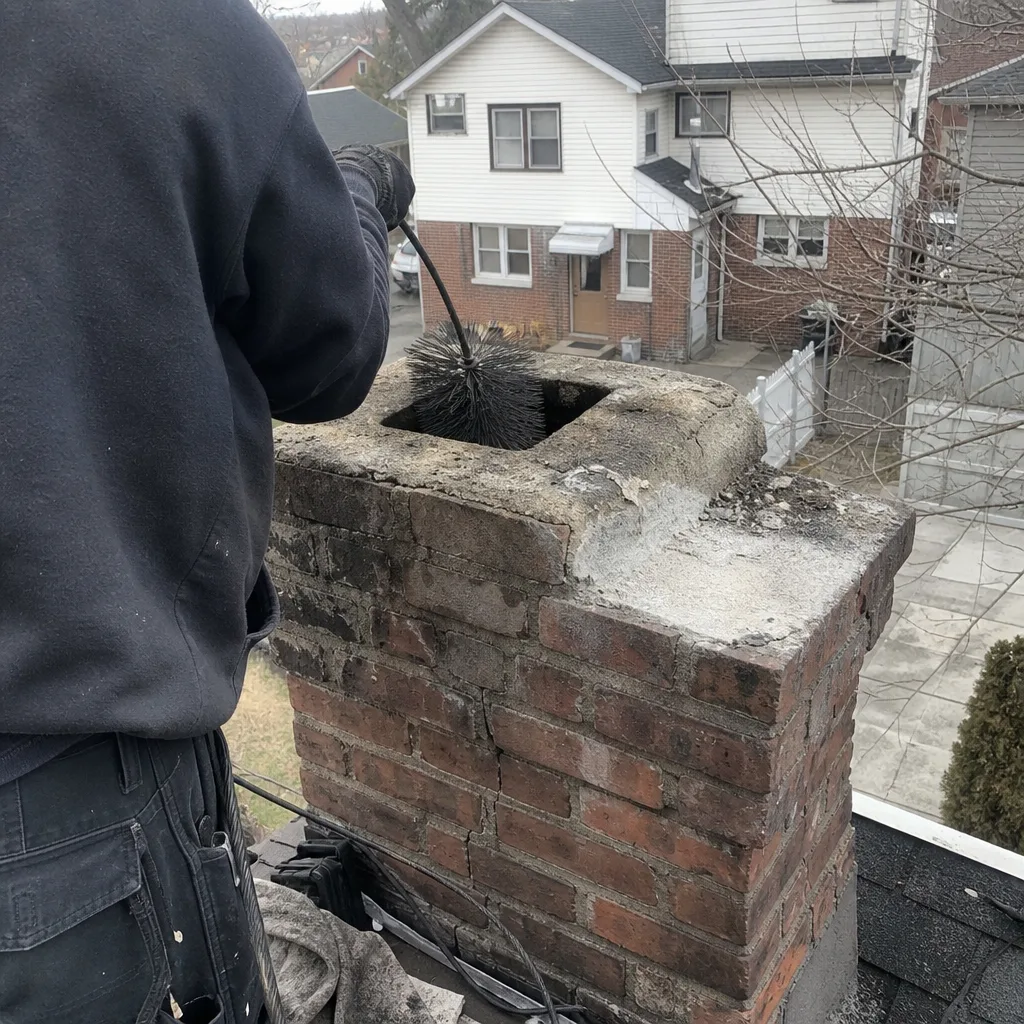 Before
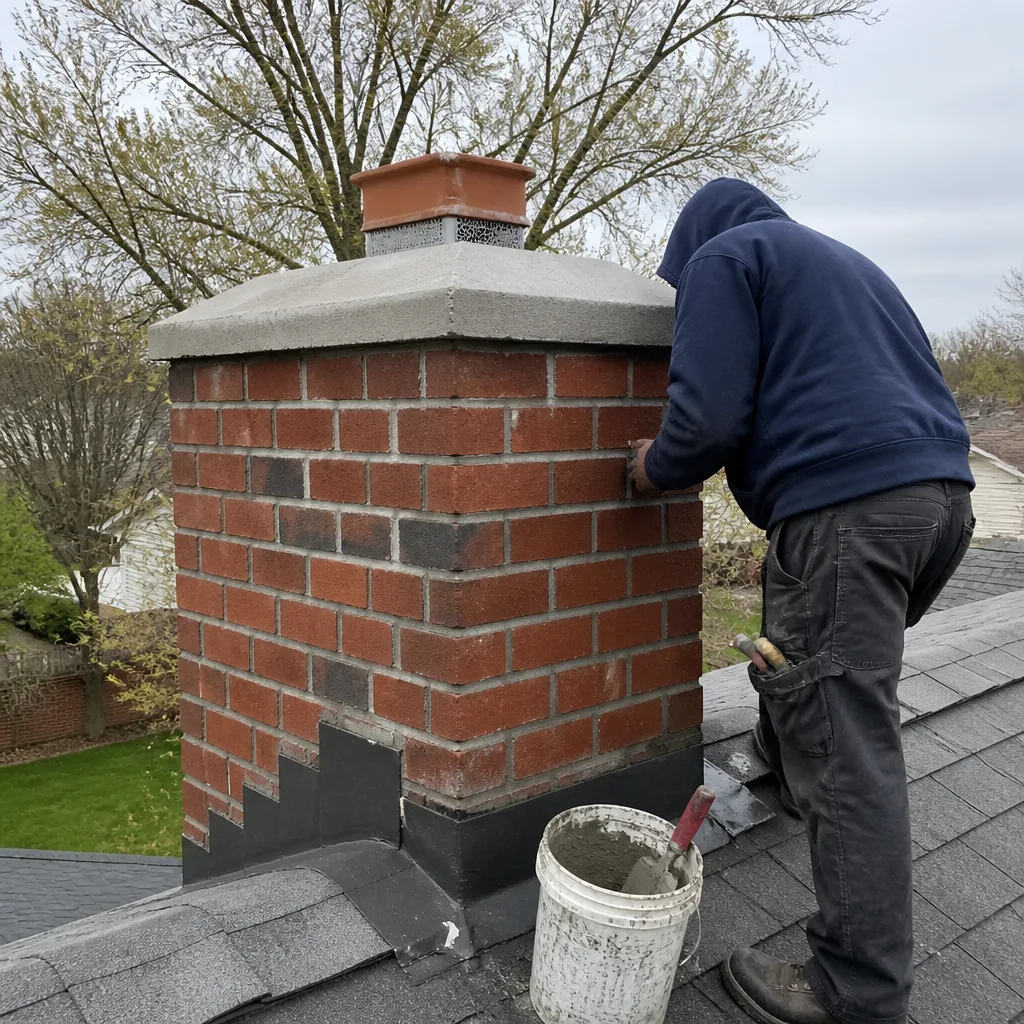 After
AfterDIY vs Professional Chimney Cleaning: The Jamaica Homeowner’s Decision Guide
A chimney brush, a rod set, and a Saturday afternoon will remove light soot from a straight flue. They will not tell you whether the liner behind that soot is cracked, and that’s the part that starts fires. This guide is for Jamaica homeowners standing in the hardware aisle wondering if they should spend $60 on a brush or call a sweep. We’ll walk through exactly when DIY makes sense, what it physically cannot detect, what both paths actually cost, and how to decide without guessing. Because the honest answer isn’t “never do it yourself.” It’s “know what you’re looking at first.”
Quick Answer
DIY chimney brushing is reasonable if you have a short, straight, unlined or clay-lined flue, burn only seasoned hardwood or have a wood stove with a documented clean liner, and you’re doing routine maintenance between professional inspections. Most Jamaica homes don’t meet those conditions, because of oil-to-gas conversions, offset flues, older liners, and storm shifting-so if you’re unsure, read our How to Hire a Chimney Cleaning Contractor in Jamaica: A Step-by-Step Guide. If your chimney handles a furnace, water heater, or boiler, or you haven’t had a camera inspection in three years, hire a professional. The brush removes soot. It doesn’t reveal whether the liner behind the soot is cracked, and that’s the part that starts fires.
Table of Contents
- When DIY Chimney Cleaning Actually Makes Sense
- What a Brush Sweep Physically Cannot Detect
- Five Jamaica-Specific Conditions That Disqualify DIY
- The Real Cost of DIY: Equipment, Time, Disposal, Liability
- What a Documented Professional Cleaning Costs in Jamaica
- The Actuarial Argument for Camera Documentation
- How to Do DIY Right: The Interim Brushing Protocol
- Common Mistakes to Avoid
- When to Call a Professional
- Frequently Asked Questions
- The Bottom Line
 Before
 After
AfterWhen DIY Chimney Cleaning Actually Makes Sense
Let’s be direct about this. There’s a legitimate case for a homeowner brushing their own chimney, but it’s narrow. In our work across Jamaica since 2009, we’ve looked at over 38,000 chimneys. We can tell you precisely the profile of a home where DIY brushing is a defensible maintenance choice. You need four structural conditions, all present at once.
First, the flue must be short and straight. By short, we mean under 15 feet from firebox to cap. By straight, we mean no offsets, no bends, no corbeling. If you can drop a weighted line from the top and hit the firebox clean, that qualifies. Any bend means a rod-and-brush setup will miss sections where creosote accumulates, also called the smoke shelf and upper chamber.
Second, you must know the liner condition. Not think you know. Know, because someone put a camera down it and gave you photos. A homeowner who got a documented Level 2 inspection two years ago and has the photo record showing a clean, intact clay liner can reasonably brush between inspections. A homeowner who has never had the flue scanned is brushing blind.
Third, the chimney must serve only a single appliance. A wood stove. One fireplace. That’s it. The moment a furnace, boiler, or water heater vents into the same chimney or a shared flue, the equation changes. Appliance flues carry different combustion byproducts, run at different temperatures, and produce distinct creosote types. Brushing one section while missing another creates a false sense of safety.
Fourth, nothing about the system has changed recently. No new heating appliance installed in the last five years. No liner replacement. No storm that shifted the stack. No renovation that added a second appliance to the venting system. Changes alter draft dynamics, and a brush cannot measure draft.
If all four conditions hold, DIY brushing between professional inspections is reasonable maintenance. That’s the honest answer. Everything else in this guide explains why most Jamaica homes don’t clear that bar, and what to do about it.
The Wood Stove Exception
There’s one scenario where DIY makes unambiguous sense: routine interim brushing on a wood stove with a documented clean liner. Wood stoves generate creosote quickly, because they run at lower temperatures than open fireplaces and burn for longer cycles. A stove used daily in a Jamaica winter can accumulate enough glazed creosote in six weeks to warrant brushing. You’re running a brush up the stove pipe and flue in that setup. The stove pipe disconnects, sections come apart, and the brush follows the same path every time. If the liner was documented clean and intact at the last professional inspection, brushing it yourself between those inspections is sound practice. You’re maintaining a known-good system. You’re not discovering anything new. We’ll cover the correct protocol later in this guide.
What a Brush Sweep Physically Cannot Detect
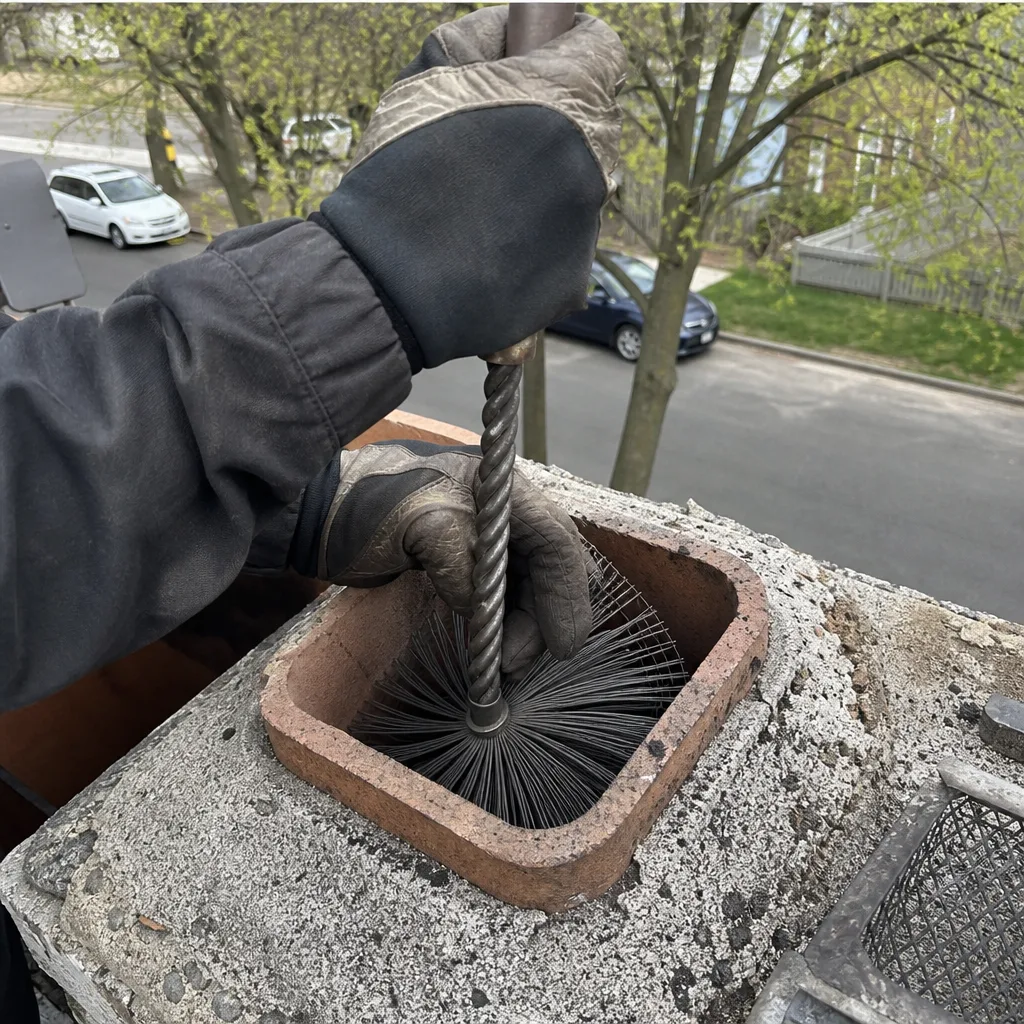
A chimney brush does one thing: it dislodges soot and creosote from the flue walls it can reach. It does not inspect. It does not measure. It does not document. Here’s what a brush physically cannot tell you, no matter how carefully you use it.
Liner Fractures and Spalling
Clay tile liners crack. They crack from thermal stress, from water intrusion, from freeze-thaw cycles in Jamaica’s winters, and from the settlement that older homes experience. A cracked liner is the single most common fire-starting defect we find in Jamaica chimneys, because it allows heat and combustion gases to reach combustible framing inside the wall cavity. A brush slides over a cracked tile without resistance. The soot comes off, the crack remains, and you’ve just cleaned a flue that’s still unsafe. Spalling is the term for clay tile surface deterioration, where thin pieces flake off and fall into the flue. A brush may knock loose spalled tile fragments, which then wedge at the next offset and create a blockage. You’d never know until smoke backs up or a CO detector fires.
Flue Draft Measurements
A brush cannot measure draft. Draft is the pressure differential that pulls combustion gases up and out. Too little draft means smoke, carbon monoxide, and moisture linger in the flue and cool, accelerating creosote formation. Too much draft means the appliance burns too hot and the chimney can’t handle the thermal load. Draft measurement requires a draft gauge inserted into the flue at a specific point during or after a firing cycle. No homeowner brushing their chimney has this data. We measure it on every professional visit in Jamaica.
Deteriorated Smoke Chambers
The smoke chamber is the funnel-shaped section above the firebox, below the flue liner. In many older Jamaica homes built before widespread liner standards, smoke chambers were built with corbeled brick, which is brick laid in stepped layers resembling an upside-down staircase. Creosote packs into those steps. One brush cannot remove it. It requires hand scraping, often from the roof down through the chamber. We’ve cleaned Jamaica chimneys where the smoke chamber holds more creosote by weight than the entire flue above it. If you’re brushing the flue and leaving the smoke chamber untouched, you’re handling half the system.
The Undocumented Flue
This is the part homeowners don’t consider until they need it. Insurance companies increasingly want documentation after a chimney-related incident. Home sellers are asked for maintenance records. A professional sweep provides a written record with a photo log, documenting the flue’s condition before and after. A DIY brushing provides nothing. If a fire occurs and the insurance adjuster asks when the chimney was last inspected, “I brushed it myself last fall” is not a documented inspection. It’s a statement without evidence. A brush cannot produce the photo record that insurers, real estate transactions, and the Level Two Chimney Jamaica home service standard all require.
Five Jamaica-Specific Conditions That Disqualify DIY
Jamaica, Queens has a specific housing stock and a specific history. These conditions appear routinely in our service area and they each, independently, make DIY brushing a bad decision. You can find a detailed breakdown of professional cleaning scope in our Chimney Cleaning & Sweep in Jamaica guide, but here’s the disqualifying list.
- Oil-to-gas conversion history. Tens of thousands of Jamaica homes burned fuel oil for decades before converting to natural gas. The conversion changed the flue’s operating conditions permanently, not inherently a problem, but it requires a liner assessment. Older clay liners sized for oil combustion byproducts may not match the condensation profile of gas combustion. Gas produces water vapor that mixes with residual oil deposits and forms an acidic paste. A brush removes the paste but cannot tell you whether the liner has been degraded by years of it.
- Pre-1980 construction with original clay liners. Jamaica’s housing stock includes extensive pre-war and mid-century construction. Original clay liners from before 1980 are now 45+ years old. Tile-to-tile mortar joints crack. Tile sections separate. We see liners in Jamaica homes where individual tiles have rotated out of alignment by inches. A brush passes over these defects smoothly. A camera documents them in five minutes.
- Offset flues, which are common in Jamaica’s attached row houses. Row houses and semi-attached homes in Jamaica frequently have flues that offset partway up, meaning the flue shifts laterally, sometimes more than once, to follow the architectural line or to share a stack with an adjacent unit. A brush on flexible rods cannot apply even pressure through offsets. You leave thick creosote at every bend. And every bend is a collection point.
- Recent major storm events. The October 2021 nor’easter, Hurricane Ida’s remnants, and recurring winter freeze-thaw cycles have shifted chimneys across Jamaica. A shifted stack means cracked flue tiles, broken crown mortar, and separated flashing. A brush cleaning after structural movement is like repainting a car with a bent frame. The structure needs a professional Chimney Repair in Jamaica assessment first.
- Multi-appliance venting, especially where a water heater shares the flue. In Jamaica basements, we regularly see a furnace or boiler and a water heater sharing a single flue. Gas water heaters run constantly, producing a low-volume, low-temperature exhaust stream that creosotes differently than a fireplace. When the fireplace is brushed but the shared flue section above the appliance junction is not accessed properly, the homeowner believes the entire system is clean. It is not.
If any of these five conditions apply to your home, DIY brushing is not a maintenance task. It’s a deferral of inspection while assuming the flue is safe.
The Real Cost of DIY: Equipment, Time, Disposal, Liability
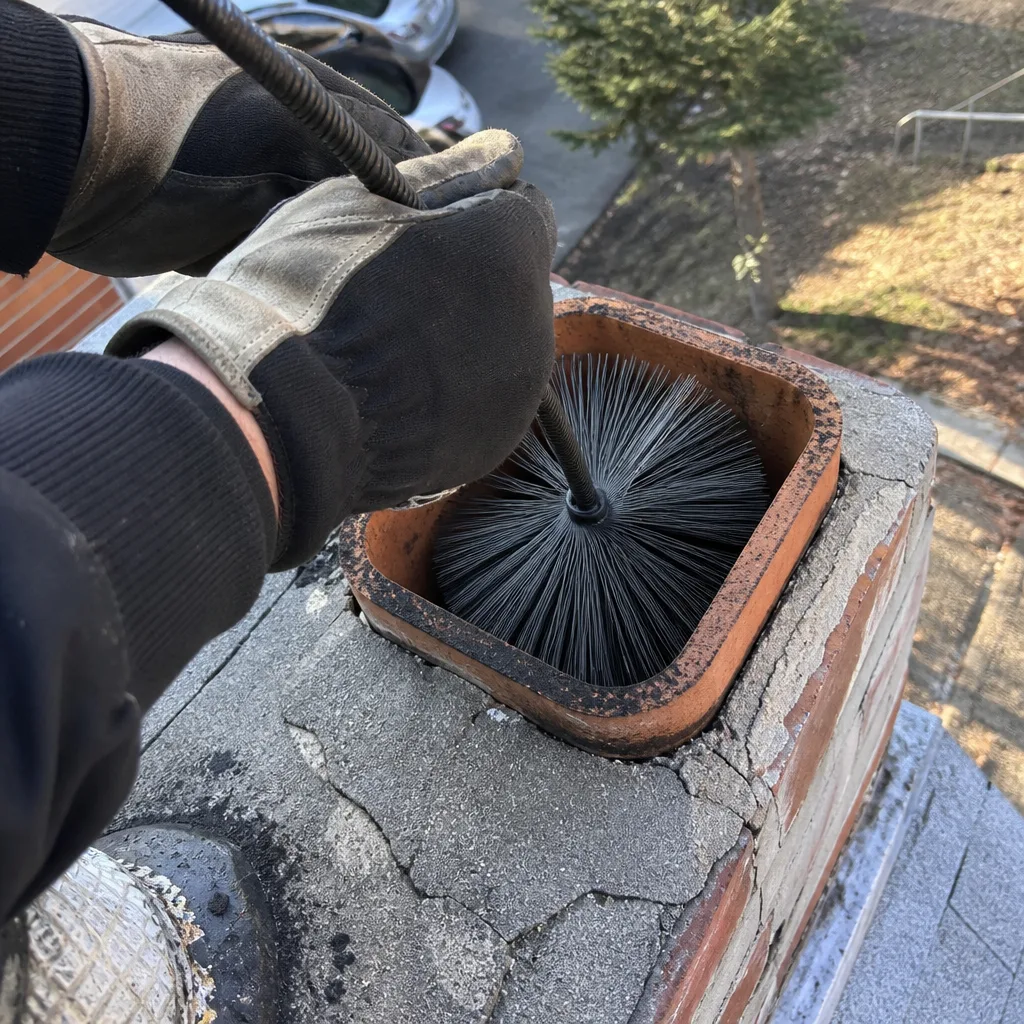
The honest DIY cost calculation is not the $40 brush set at the big-box store. Here’s the actual line-item reality for a Jamaica homeowner doing this correctly, which means safely, with proper equipment and cleanup; for a full comparison, see our Chimney Cleaning Cost Breakdown: The Jamaica Homeowner’s Reference for 2026.
| Item | Typical Cost Range in Jamaica |
|---|---|
| Chimney brush, correct diameter for your flue | $35 – $75 |
| Flexible rod set (or rope and pull rings if two-person) | $50 – $110 |
| Drop cloths, plastic sheeting, HEPA vacuum rental | $40 – $90 |
| Dust mask, gloves, safety goggles, headlamp | $25 – $60 |
| Ladder (if roof access needed) – rental if not owned | $35 – $65/day |
| Disposal bags and disposal handling | $10 – $25 |
| Total equipment and materials | $195 – $425 |
| Time (setup, brushing, cleanup, disposal, ladder work) – 4 to 6 hours at your own labor rate | Varies by homeowner |
Compare that to a professional cleaning in Jamaica, which ranges from $185 to $340 depending on flue condition, height, and appliance count. But the real cost of DIY isn’t in the equipment line items. It’s in the exposure you’re accepting.
The Liability Exposure of an Undocumented Flue
When a professional sweep cleans a chimney, they document it. They provide a written scope before work starts, a written price, and a completed photo record after. That record is a legal document. If something goes wrong later, the homeowner has evidence of professional maintenance. That evidence matters to insurers, to home inspectors during resale, and to warranty claims on new liners or appliances. We know this because Haven Standard Clause 4 requires a documented photo record on every job, and we’ve been doing that since 2009, longer than most Jamaica homeowners have owned their current homes.
A DIY brushing leaves no such record. The homeowner absorbed the equipment cost, spent a Saturday on the roof, and can’t prove any of it. If a chimney fire occurs, or a CO leak, or a purchase inspection flags the chimney, the absence of documentation works against you. You’re asking an insurance adjuster to take your word for it. Adjusters don’t take anyone’s word for anything.
That’s the false economy. You didn’t save $300. You deferred professional documentation while performing a task that didn’t actually verify the system is safe.
What a Documented Professional Cleaning Costs in Jamaica
Within Jamaica and the surrounding Queens market, professional chimney cleaning pricing falls into a predictable range. A standard cleaning and inspection for a single-flue fireplace runs $185 to $265. Add a furnace or boiler flue to the same visit, and you’re at $240 to $340. Chimneys over 25 feet, offset flues, and uncleaned heavy creosote build (Class III glazed creosote) can push the quote toward the upper end of that range. A straightforward wood stove setup with a documented clean liner runs at the lower end.
What separates a $185 cleaning from a $340 cleaning isn’t marketing. It’s the scope, the documentation, and the time. A proper professional cleaning in Jamaica should include the sweep itself, a camera scan of the flue before and after, a written report with photo documentation, and a written price delivered before the work begins. That’s the standard Fireplace Services in Jamaica page describes. The camera scan is the difference maker. It verifies the brush did its job and, far more importantly, captures liner condition, smoke chamber integrity, and moisture intrusion that a brush cannot detect.
We don’t do phone quotes for cleaning. Haven Standard Clause 1 requires a written price before work starts, and that means we need to see the chimney. But the price range above holds for the majority of Jamaica homes we serve.
Here’s the structure of a documented professional cleaning, step by step, so you know exactly what you’re paying for:
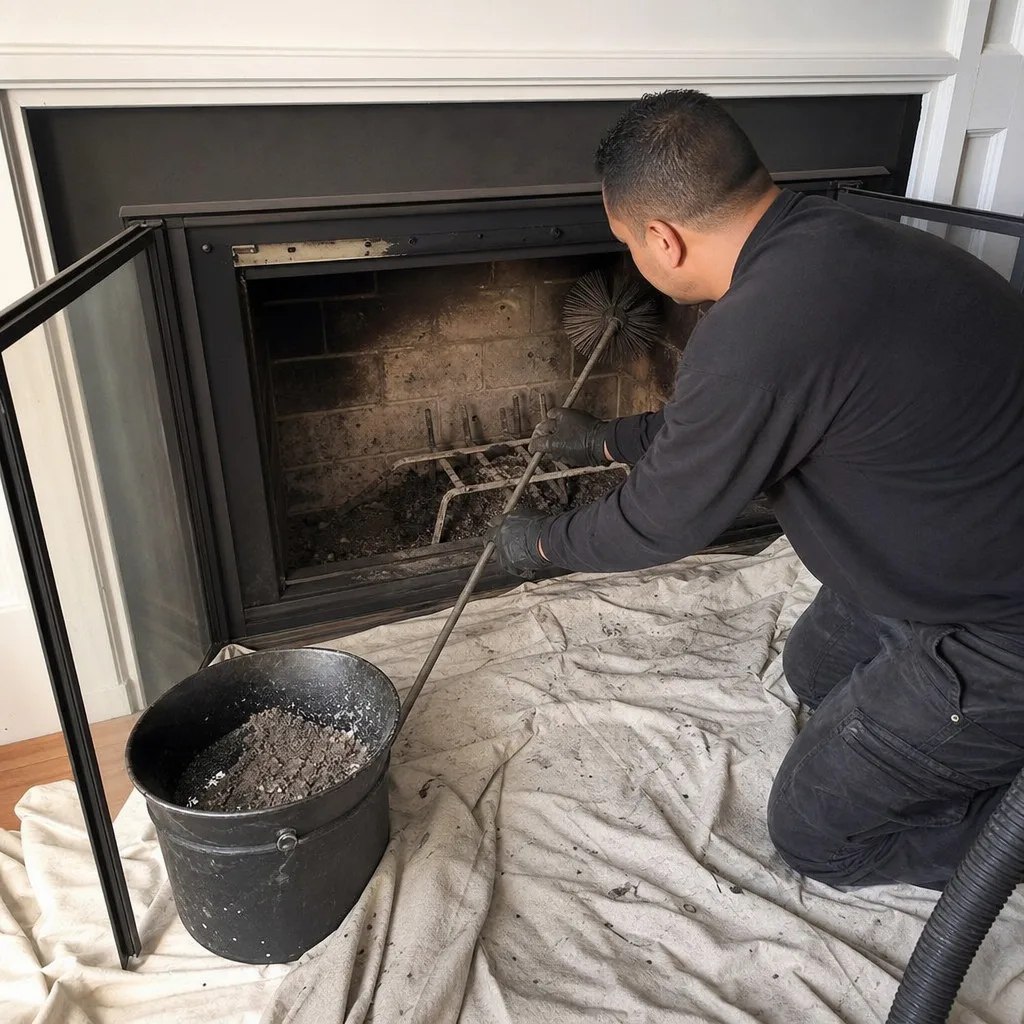
- Arrival and exterior assessment. The technician walks the roof or uses a camera pole to check cap, crown, flashing, and visible stack condition. This takes 10 minutes and identifies issues a brush from below would never find.
- Interior protection setup. Drop cloths and a vacuum-rated barrier cover the hearth and floor. Soot is fine-grained and travels.
- Camera scan, before. The camera goes down the flue. You see what the technician sees. If the liner is fractured, you know before the brush touches it, because cleaning a fractured liner without addressing the fracture is pointless and potentially dangerous.
- The sweep. Correct-diameter brushes sized to the flue, run the full length of the liner, including the smoke chamber. This is where hand tools, not just rod-driven brushes, matter.
- Camera scan, after. Same camera, same path. You can see the difference. The technician documents it in the photo record.
- Written report. You walk away with photos, condition notes, and any recommendations noted in plain terms: liner condition, creosote class found, draft measurement if applicable, and what, if anything, can wait.
That’s a documented service. It is not comparable to a brush run by a homeowner on a Saturday, and the price reflects the scope, not a premium.
The Actuarial Argument for Camera Documentation
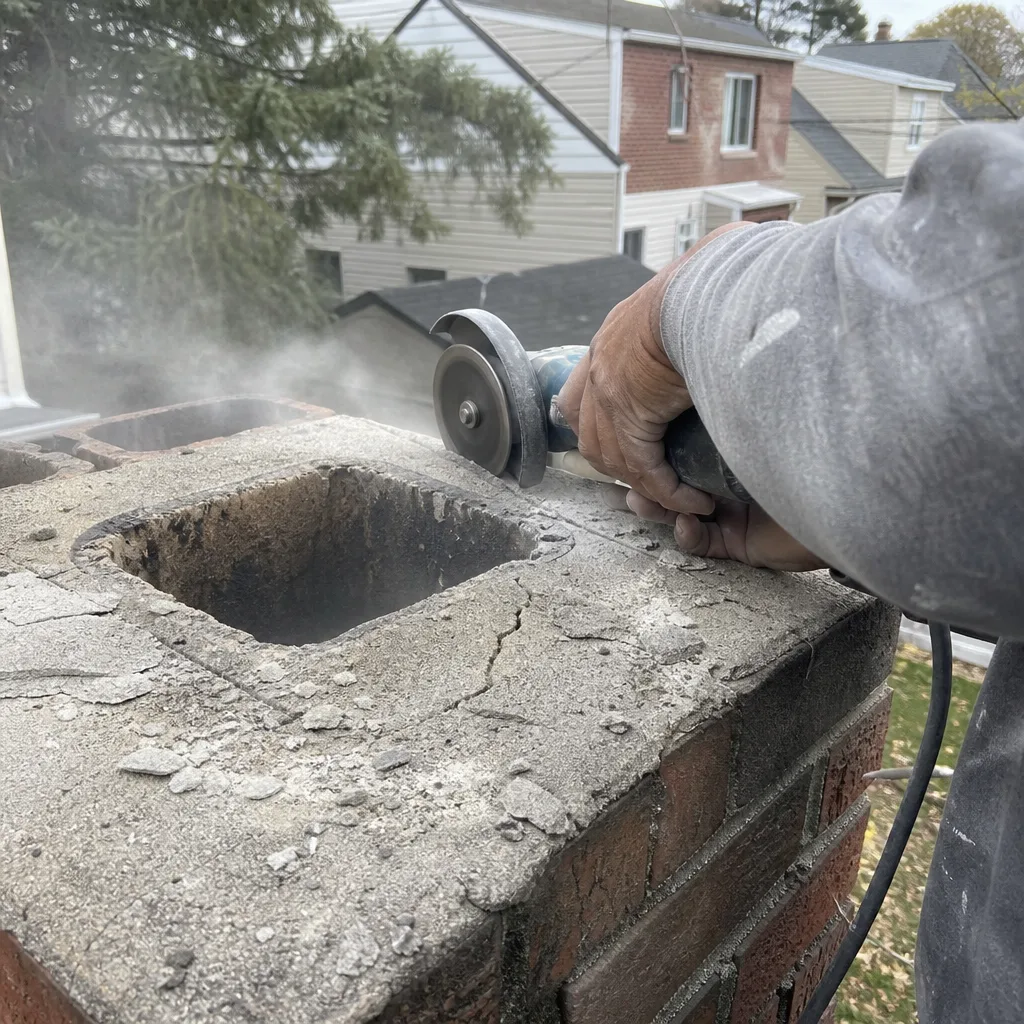
Let’s talk about why documentation matters without using fear marketing. The numbers make the argument.
According to NFPA data, chimney fires and chimney-related incidents account for a significant share of residential heating fires each year in the United States. In the Northeast, where heating season runs longer and chimneys see heavier use, the concentration is higher. The most common cause of these fires is creosote accumulation. And the most common reason creosote is allowed to accumulate is that homeowners don’t know it’s there, because no one looked.
A camera changes that. It converts an assumption into a record. When a professional inserts a camera into a Jamaica flue and documents Class III glazed creosote, the homeowner can’t un-know it. They act. The alternative, brushing it yourself, removes some creosote, never measures the class, and leaves the homeowner believing the flue is fine. That belief is the risk.
The actuarial argument is straightforward: a documented camera inspection, done every one to three years depending on usage, catches liner fractures and heavy creosote before they become fires. That early detection is cheaper than the alternative, every time. A liner repair caught early is a $600 to $1,800 job. A chimney fire that reaches the framing is a different order of magnitude, if it doesn’t claim the house.
This isn’t scare selling. It’s math. The camera is the cheapest line item in the entire chimney maintenance budget. Haven Standard Clause 4 requires it on every visit because a service that doesn’t document evidence cannot claim to have inspected anything.
How to Do DIY Right: The Interim Brushing Protocol
If you have a known system, an undocumented clean liner, a straight flue, and a wood stove or simple fireplace, here’s how to brush between professional inspections without making things worse. This protocol assumes you’ve had a professional camera inspection in the last two years and you still have the photo record showing an intact liner.
- Confirm the flue dimensions. Your prior inspection report will list the flue size. Match the brush diameter to the liner inside dimension. A brush too small doesn’t contact the walls. A brush too large jams and can damage clay tile surfaces.
- Work from the bottom up, through the firebox, on a wood stove with a removable pipe section. This is the safer access point for a homeowner. Climbing a Jamaica row house roof with a ladder is a different risk profile entirely.
- Close off the firebox opening with a damp sheet or a properly fitted barrier. Run a HEPA vacuum with the hose positioned just inside the opening during brushing. Creosote dust is fine, sticky, and not something you want in the living room, or in your lungs.
- Brush in short, deliberate strokes. Don’t spin the rods aggressively. You’re dislodging light creosote, not grinding it. For glazed (Class III) creosote, stop and call a professional. A brush cannot remove glazed creosote, and attempting to will only burn your Saturday.
- Brush the stove pipe too, on a wood stove. Disconnect sections, run the brush through each, and reassemble with the seams aligned. The stove pipe accumulates creosote faster than the flue above it.
- Photograph your work. Shoot the flue from the top if you can, or at minimum the firebox and visible flue section before and after. It’s not a substitute for a camera scan, but it creates a basic record.
- Schedule the next professional inspection for the interval your prior report recommended. DIY brushing does not extend the inspection interval. It supplements it.
This protocol respects the limits of what a brush does. It maintains a known-good system. It doesn’t attempt to inspect, doesn’t claim to document anything meaningful, and doesn’t replace the camera. Within those boundaries, it’s legitimate.
Common Mistakes to Avoid
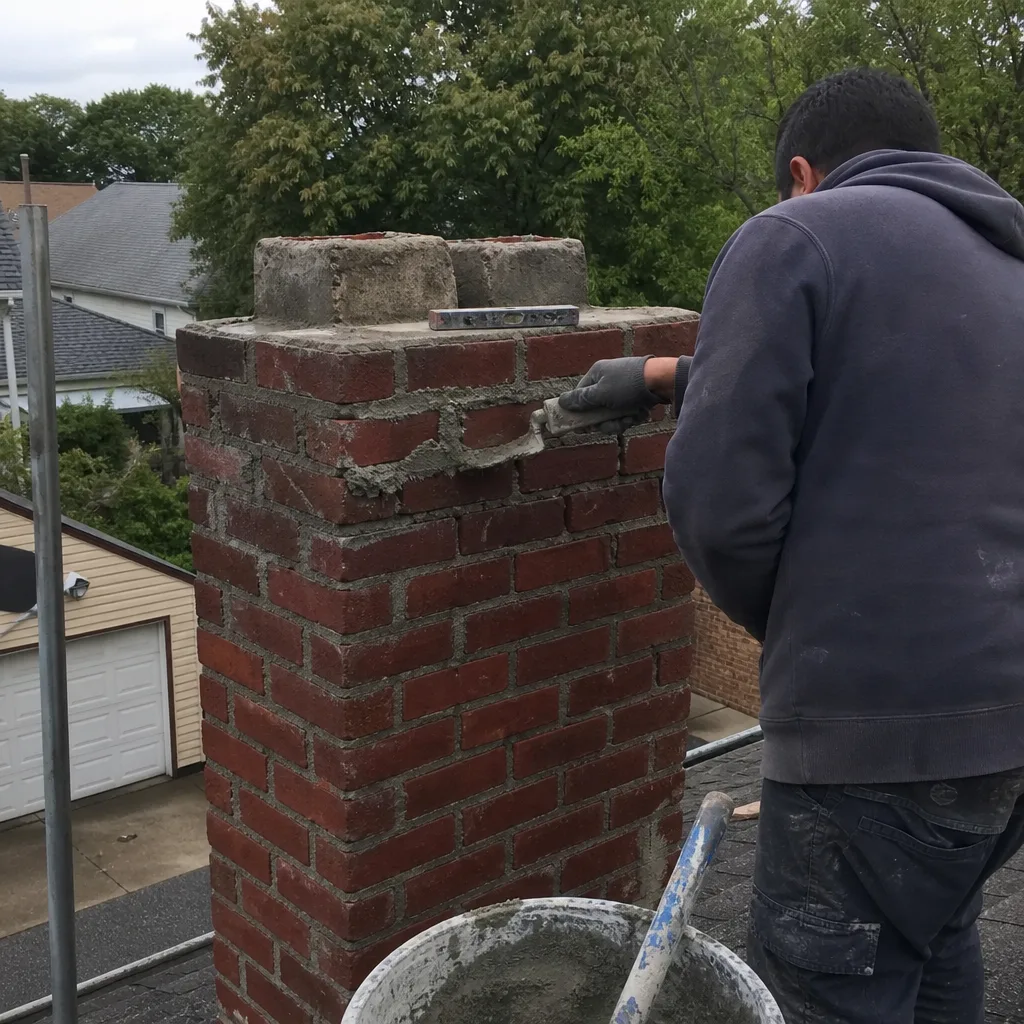
- Brushing a flue you’ve never seen inside. If you haven’t had a camera inspection, you don’t know the liner condition. Brushing a cracked liner doesn’t make it safer. It just makes it cleaner while still cracked.
- Assuming a gas appliance flue needs the same brushing as a wood fireplace. Gas flues accumulate acidic condensation residue, not the fluffy creosote of a wood fire. Brushing may not address the actual problem, and acid residue needs different handling.
- Using a metal brush on a metal liner. Stainless steel liners from manufacturers like DuraFlex, HeatShield, Gelco, or Olympia Chimney require poly brushes, not steel. A steel brush on a steel liner can gouge the surface and void the warranty. Check your liner warranty before buying anything.
- Ignoring the smoke chamber because it’s hard to reach. In Jamaica homes with original masonry construction, the smoke chamber often holds more creosote than the flue above. A brush that never reaches the chamber leaves the system half-loaded.
- Treating a DIY brushing as a substitute for the inspection interval. Brushing between inspections is fine. Skipping the inspection because you brushed is how fires start. The brush maintains. The camera verifies.
- Climbing a Jamaica row house roof without a proper ladder setup and harness. Steep pitches, tight party-wall clearances, and aging chimney caps make roof access dangerous for a homeowner. The fall risk is real. We’ve seen chimneys in Jamaica where the safest access requires a specific ladder angle around a parapet wall. That’s not a Saturday task.
When to Call a Professional
Call a professional when any of these applies: the chimney serves a furnace, boiler, or water heater in addition to, or instead of, a fireplace; you’ve never had a camera inspection; the home was built before 1980 and has its original clay liner; the flue has bends, offsets, or you’re not certain the brush reached the entire length; you see glazed, shiny creosote that a brush doesn’t move; you notice spalling tile fragments at the bottom of the firebox; there’s water staining on the ceiling near the chimney or the bricks feel damp after rain; you’re buying or selling the home and need documentation; or a carbon monoxide detector has activated near the chimney. Level Two Chimney Jamaica home service area covers all of Jamaica and Queens. Level Two Chimney Jamaica offers free estimates in Jamaica, call (516) 240-9612.
Frequently Asked Questions
A wood-burning fireplace used regularly should be professionally inspected and cleaned every year in Jamaica, where heating season runs from October to April. A gas fireplace or gas appliance flue can go two to three years between professional inspections, though the first inspection after moving into a home should happen immediately if there’s no prior documentation. The NFPA 211 standard recommends annual inspection for all solid-fuel chimneys regardless of usage frequency. Your prior inspection report will state the recommended interval for your specific system, and that’s the number to follow. Call (516) 240-9612 to schedule an inspection and get a written price before any work starts.
A standard professional chimney cleaning in Jamaica ranges from $185 to $340 depending on flue height, appliance count, and creosote condition. Single-flue fireplaces typically run $185 to $265, while chimneys serving both a fireplace and a furnace or boiler run $240 to $340. Heavy glazed creosote, offset flues, and chimneys over 25 feet can push the quote toward the upper end. A proper quote includes the sweep, camera scan, and written photo documentation, and should be delivered in writing before work begins. Call (516) 240-9612 for a free estimate in Jamaica, written price included before anything starts.
A visual check from the firebox or the roof cannot see the full length of the flue, cannot identify liner fractures behind creosote deposits, and cannot document condition in a way an insurer or home inspector would accept. Camera inspection, the NFPA 211 Level 2 standard, is the only way to verify the internal condition of a chimney. At Level Two Chimney Jamaica, a camera scan with photo documentation is included on every visit, and it’s been standard practice since 2009, not an optional add-on. The camera finds what a flashlight can’t.
If you skip cleaning and the flue has light creosote, nothing happens in the short term, and that’s the dangerous part. Creosote accumulates quietly, firing season over firing season, until it reaches a thickness where a hot fire or a chimney fire event can ignite it. A chimney fire burns fast, can reach 2,000 degrees, and can crack the liner, opening a path for flames and gases to reach the framing of your home. For a gas appliance flue, skipping maintenance can also mean undetected carbon monoxide backdrafting into the home. You may not know anything is wrong until something is very wrong. The cheapest protection is a documented inspection. Call (516) 240-9612 for a written estimate.
Yes, there’s no law in New York City or Queens County prohibiting a homeowner from brushing their own chimney. The question is whether it’s wise, and that depends on the conditions we’ve described: a short, straight flue, a documented clean liner, no recent appliance changes, and no structural movement. If those conditions don’t hold, the legality doesn’t make the risk acceptable. Most Jamaica homes don’t meet all four conditions.
It can. Liner manufacturers like DuraFlex, HeatShield, Gelco, and Olympia Chimney typically require professional installation and professional maintenance as a condition of warranty coverage. Using the wrong brush type, a steel brush on a steel liner, or damaging the liner during a homeowner brushing can void the warranty. Before doing any DIY work on a stainless steel liner, read your warranty documentation carefully. If it requires professional cleaning, we can provide documented service that preserves your coverage. Call (516) 240-9612 for a written quote.
The Bottom Line
DIY chimney brushing is not a bad idea in the right context. It’s a bad idea when it replaces inspection. A straight flue, a documented clean liner, a single wood-burning appliance, and a homeowner willing to do it correctly: that’s a reasonable maintenance profile. Most Jamaica homes don’t fit it. They have oil-to-gas conversion history, old clay liners, offset flues, shared appliance venting, or storm damage they never saw from the ground. The brush removes soot. The camera finds what the brush can’t. Before you spend a Saturday on the roof, spend an hour getting a documented camera inspection. If the flue is clean, you’ve bought yourself a clear conscience. If it isn’t, you’ve found it before it found you.
Written by Corrine Halstead, Owner at Level Two Chimney Jamaica, serving Jamaica since 2009.