
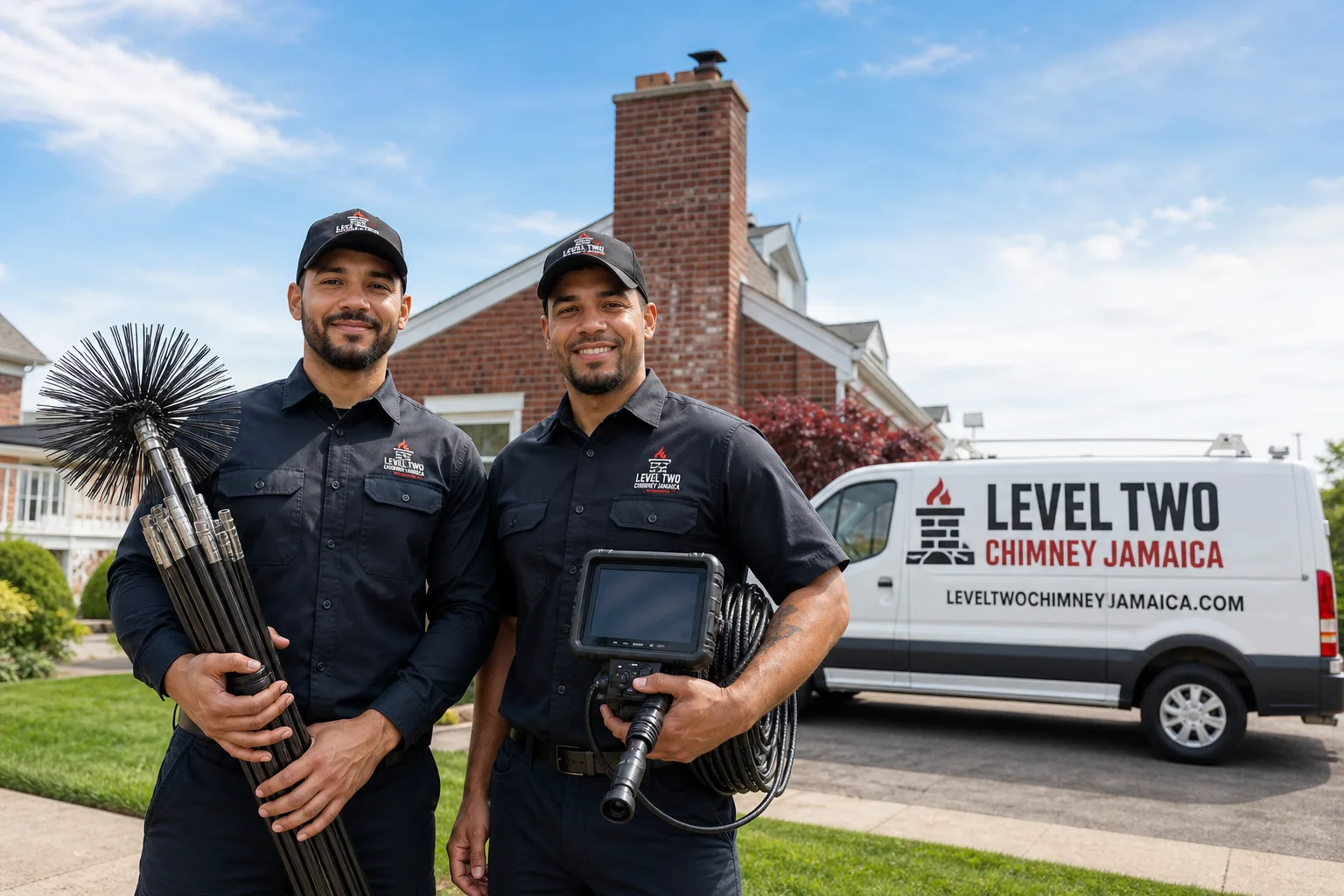
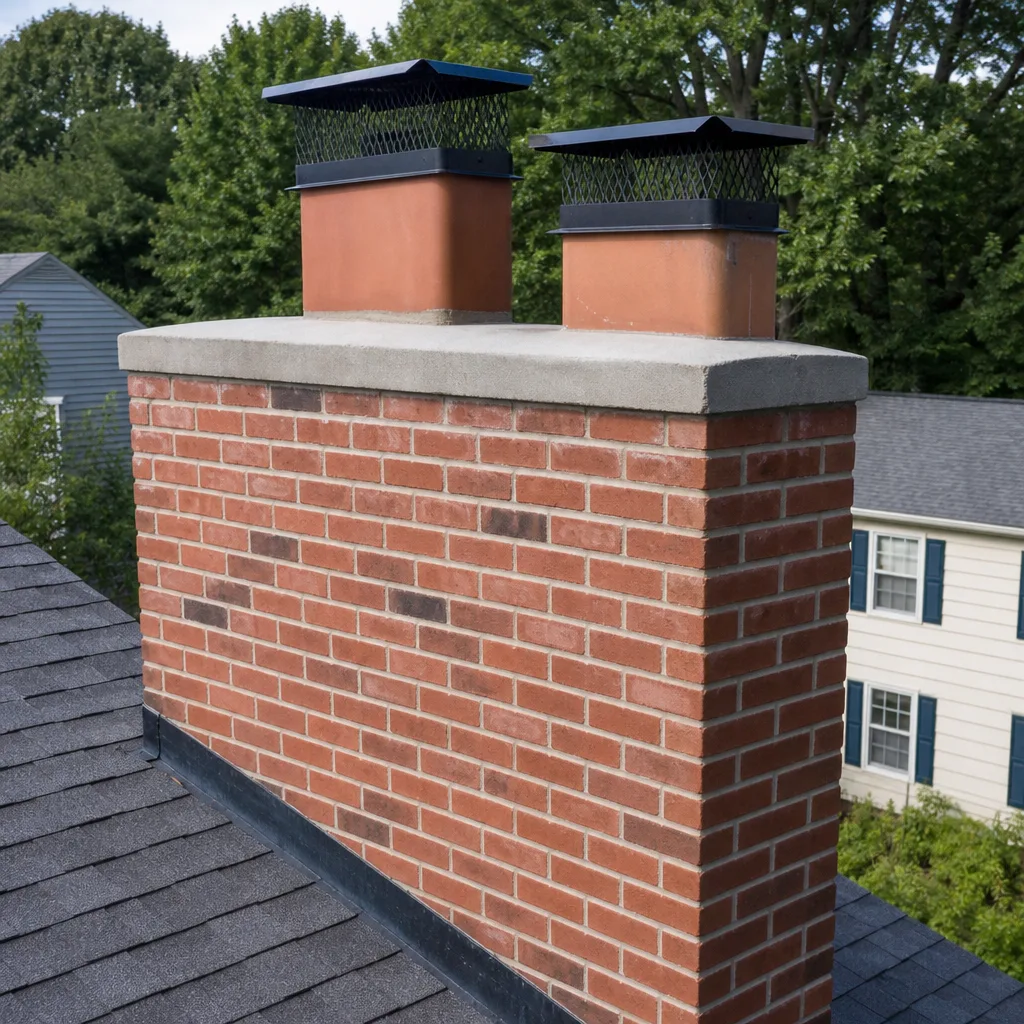
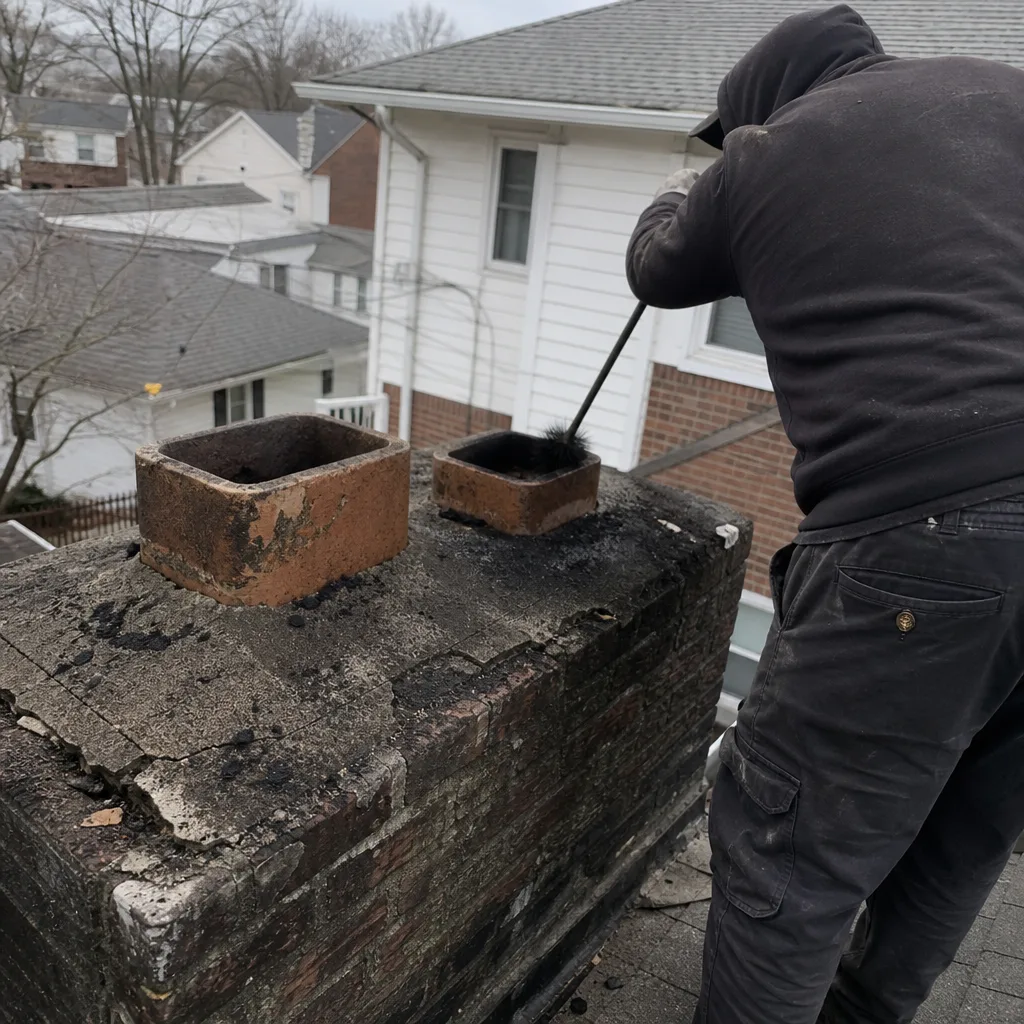
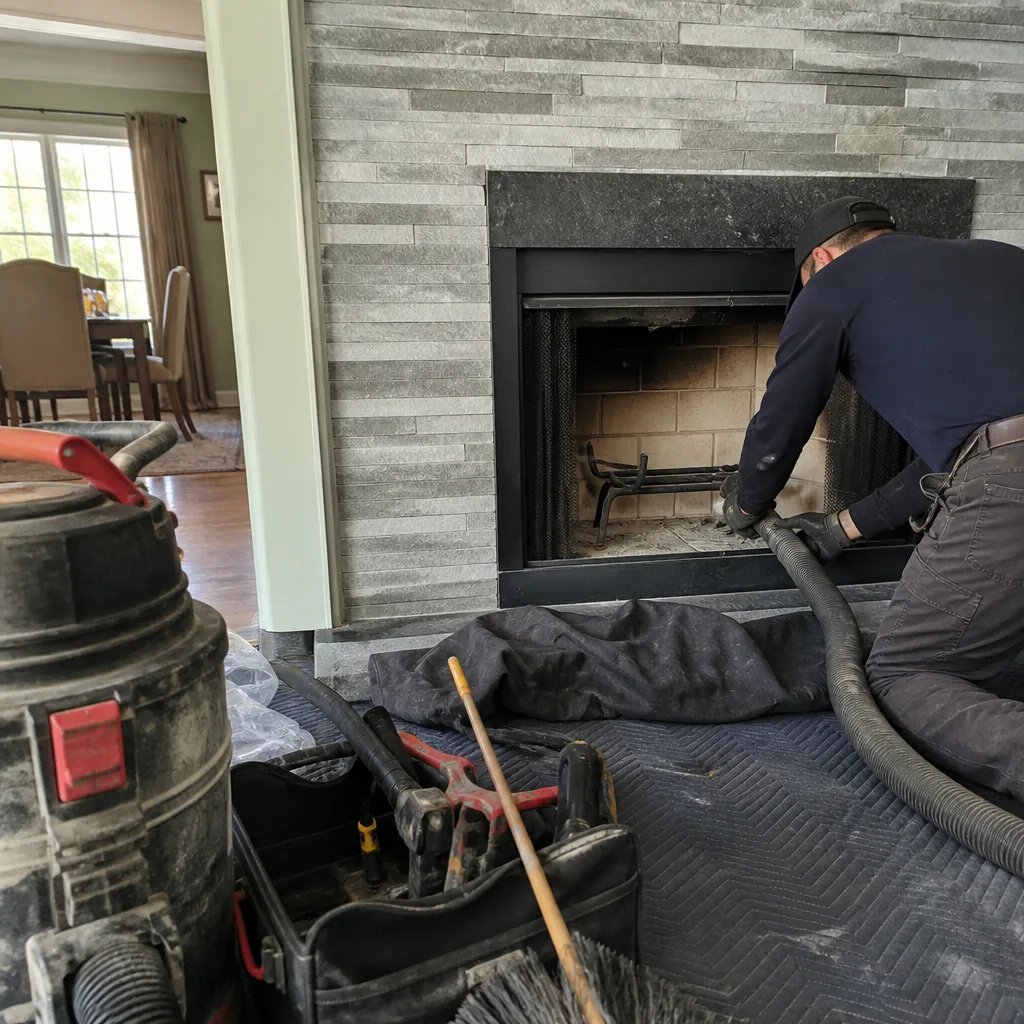
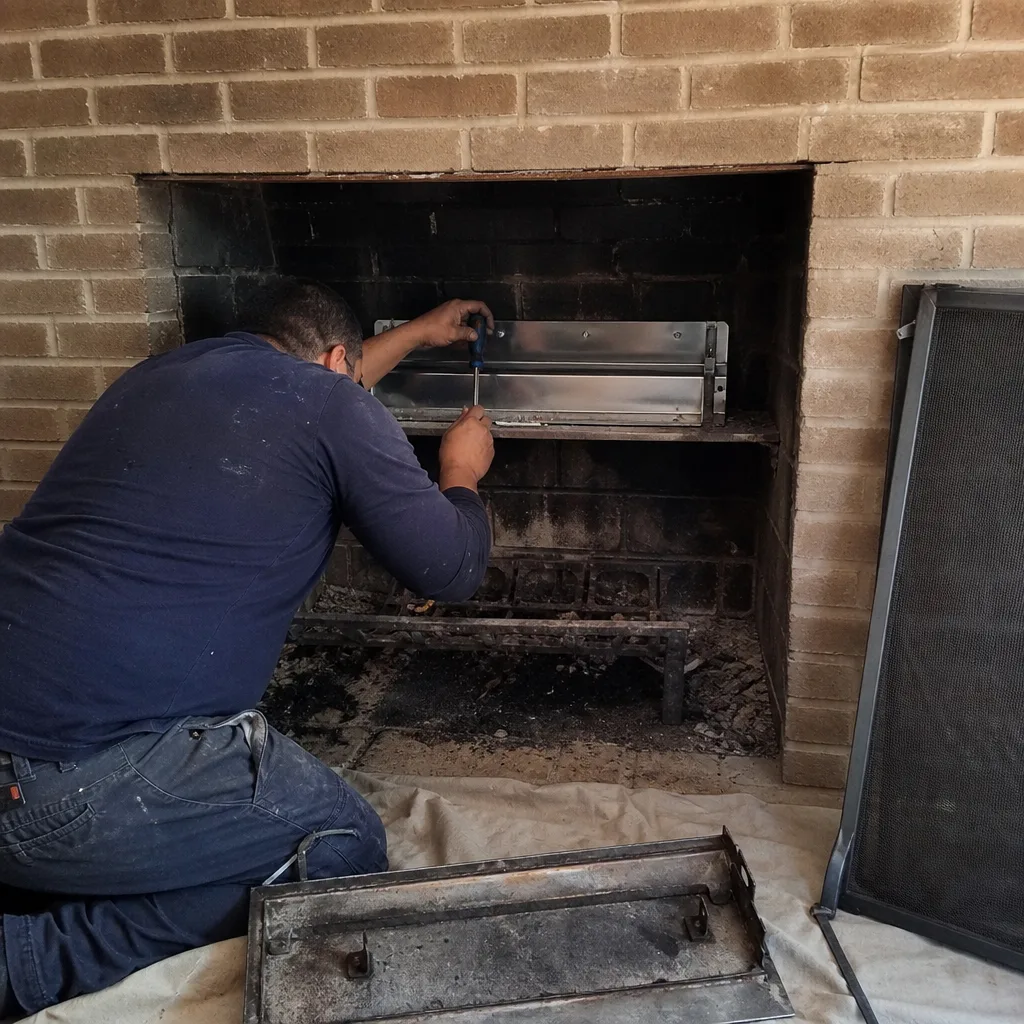
Level 1 sweep and inspection to the NFPA 211 annual standard - flue, crown, cap, and flashing checked and photographed
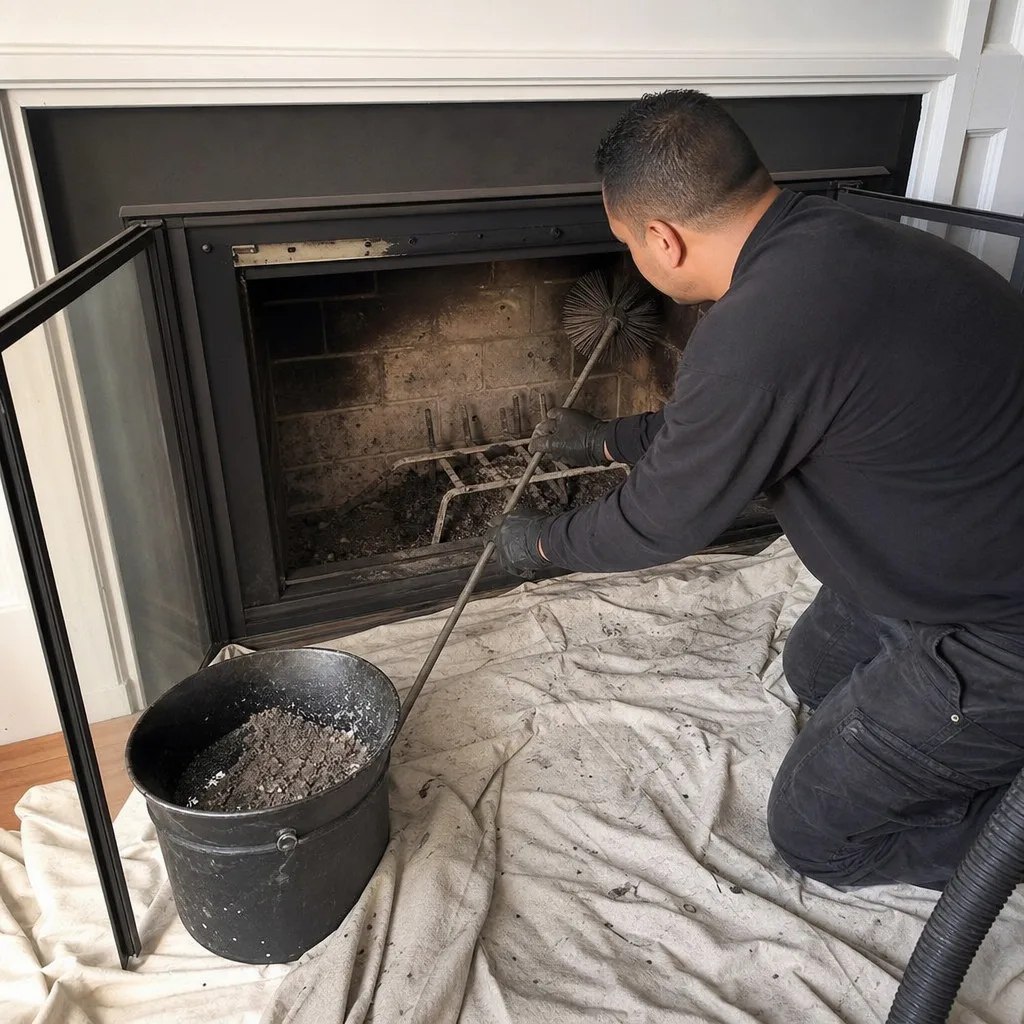
Chimney sweep logs do not sweep chimneys. They loosen some creosote - which then falls where a brush and vacuum still have to collect it.
 Before
 After
After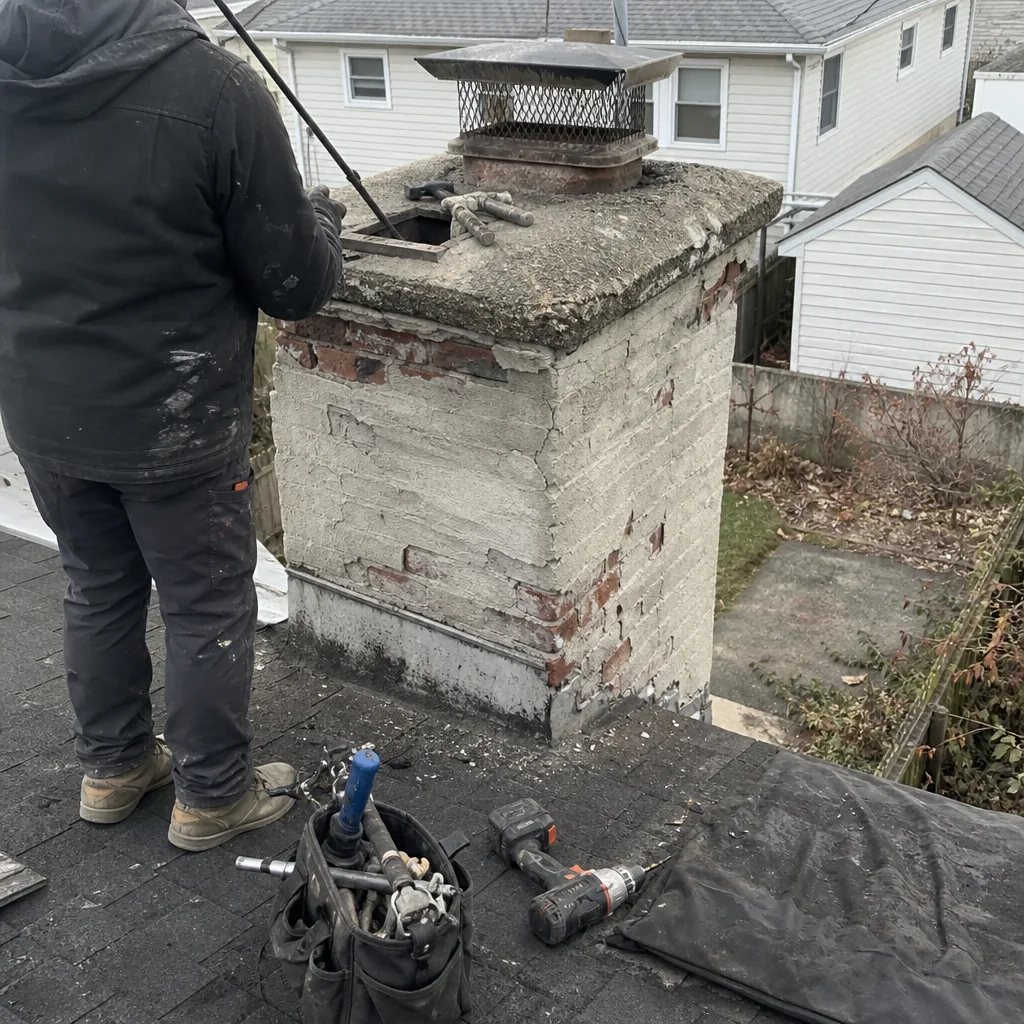 Before
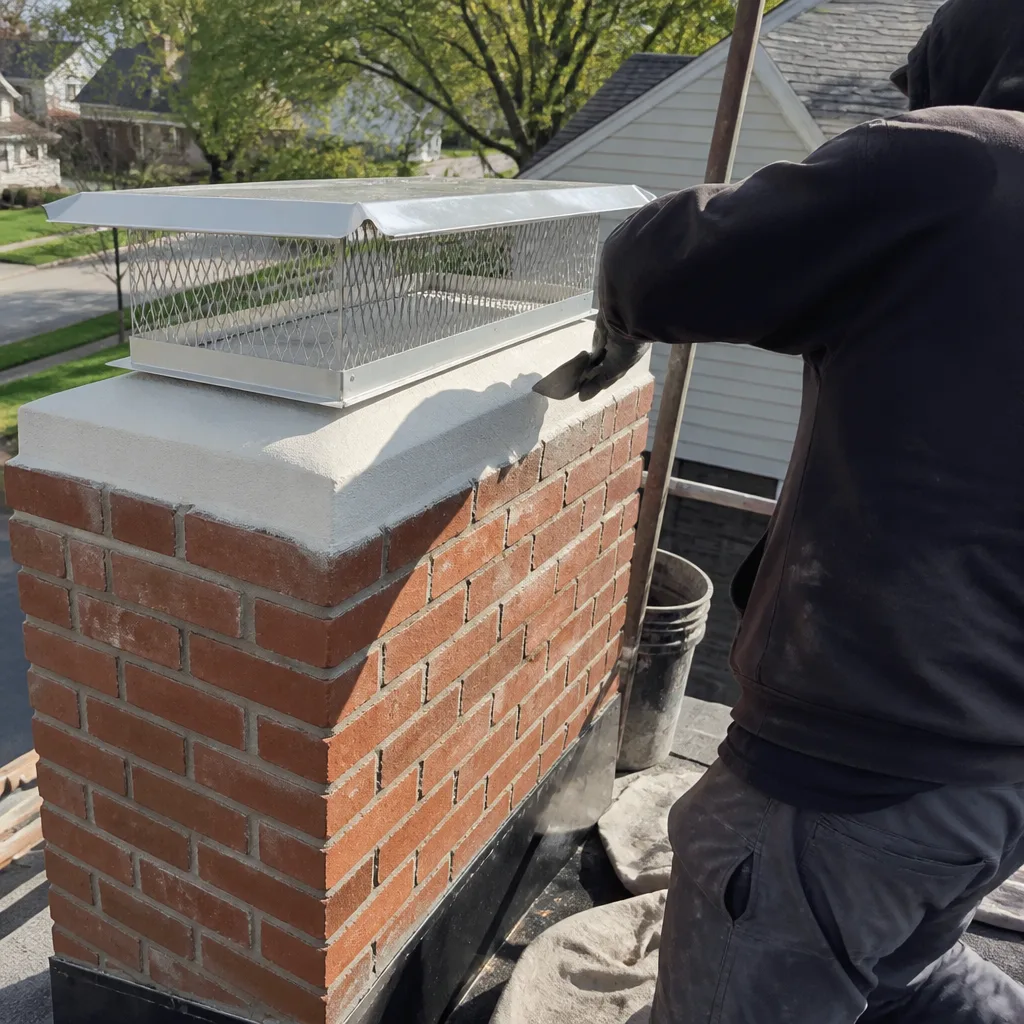 After
After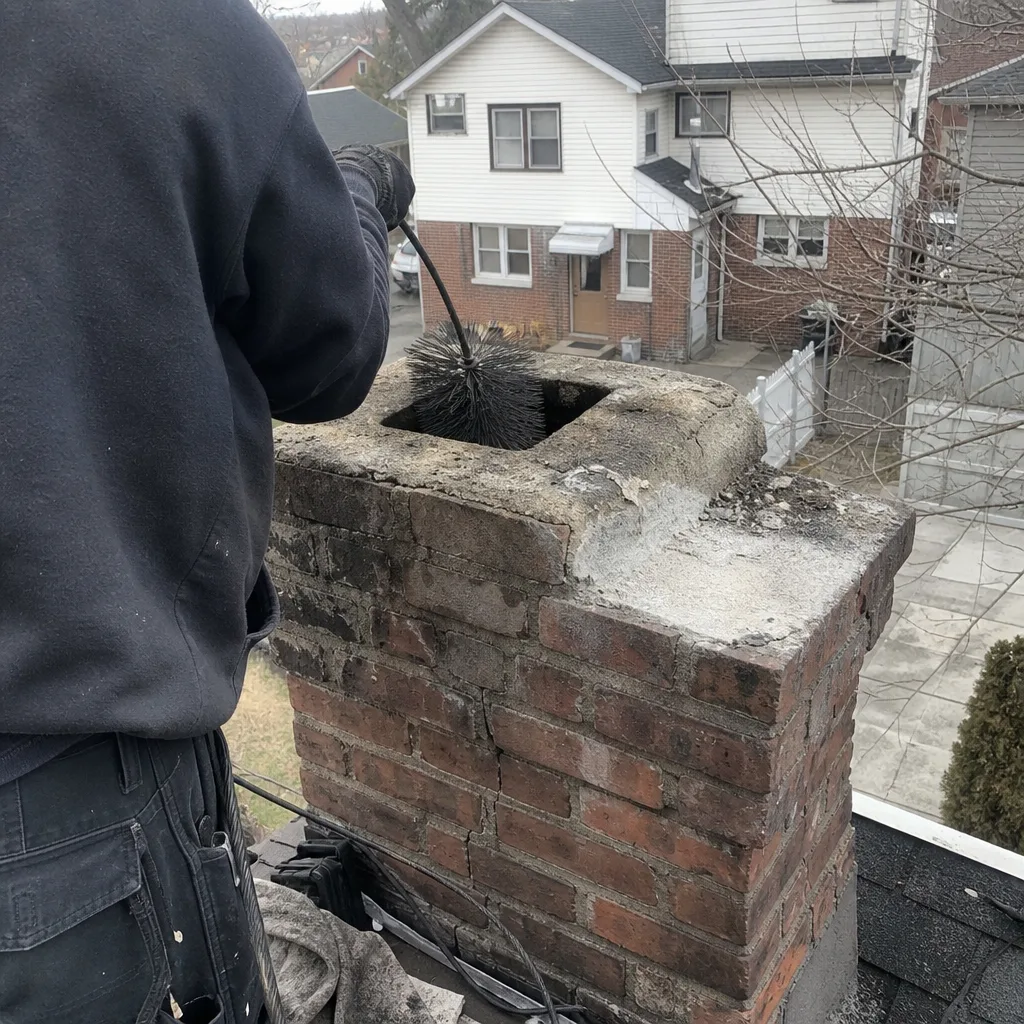 Before
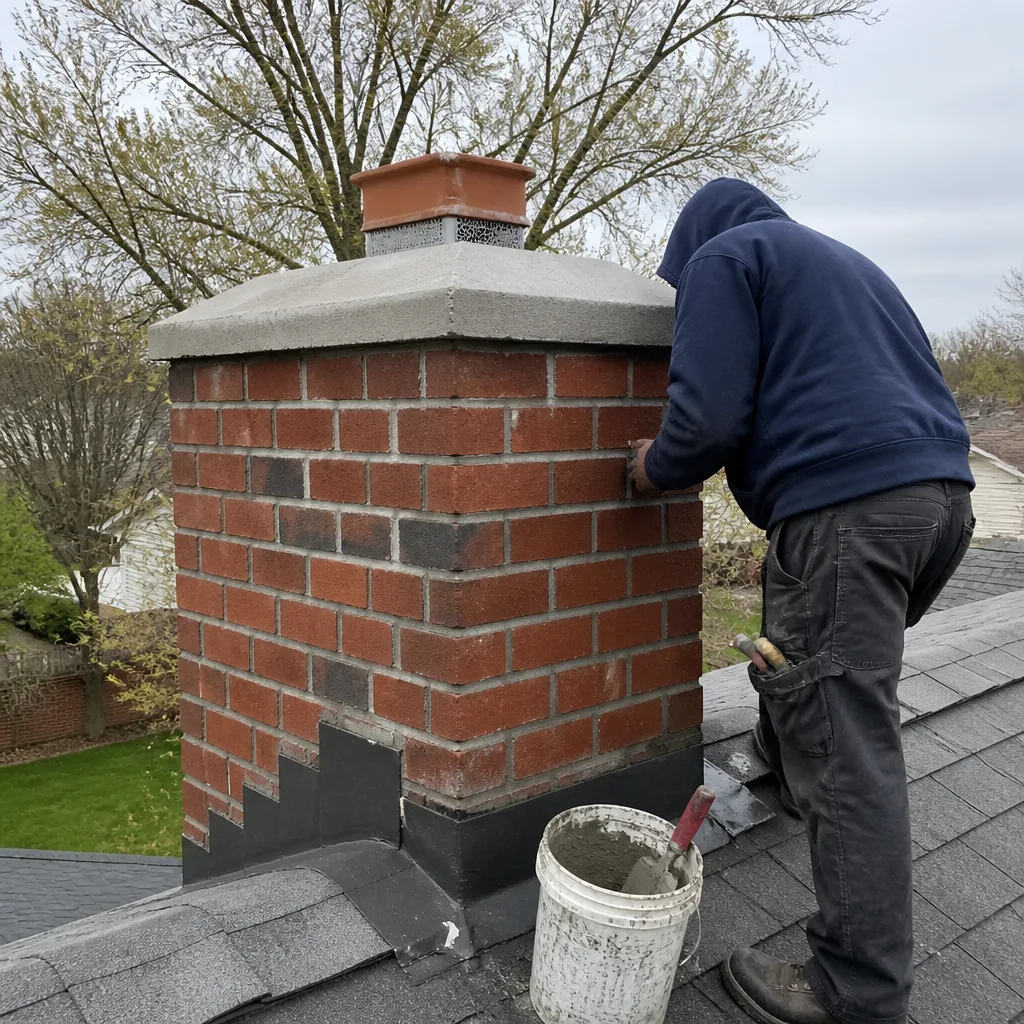 After
AfterFast, Reliable Chimney Repair Across New York
Chimney repair in New York, NY typically costs $275-$1,850 depending on scope: mortar repointing runs $275-$800, flashing repair $350-$950, a new flue liner $1,200-$4,500, and full crown rebuilds $900-$2,200. Most jobs on pre-war rowhouses and apartment buildings are completed within one to three days once permits and board approvals are in hand. We know New York’s building stock because we work in it every day, from Harlem brownstones to Brooklyn party-wall stacks. If you’re seeing water stains, crumbling mortar, or draft problems, call (516) 240-9612 and we’ll schedule a camera inspection with a written price before anything starts.
Why Level Two Chimney Jamaica Is New York’s Preferred Chimney Repair Company
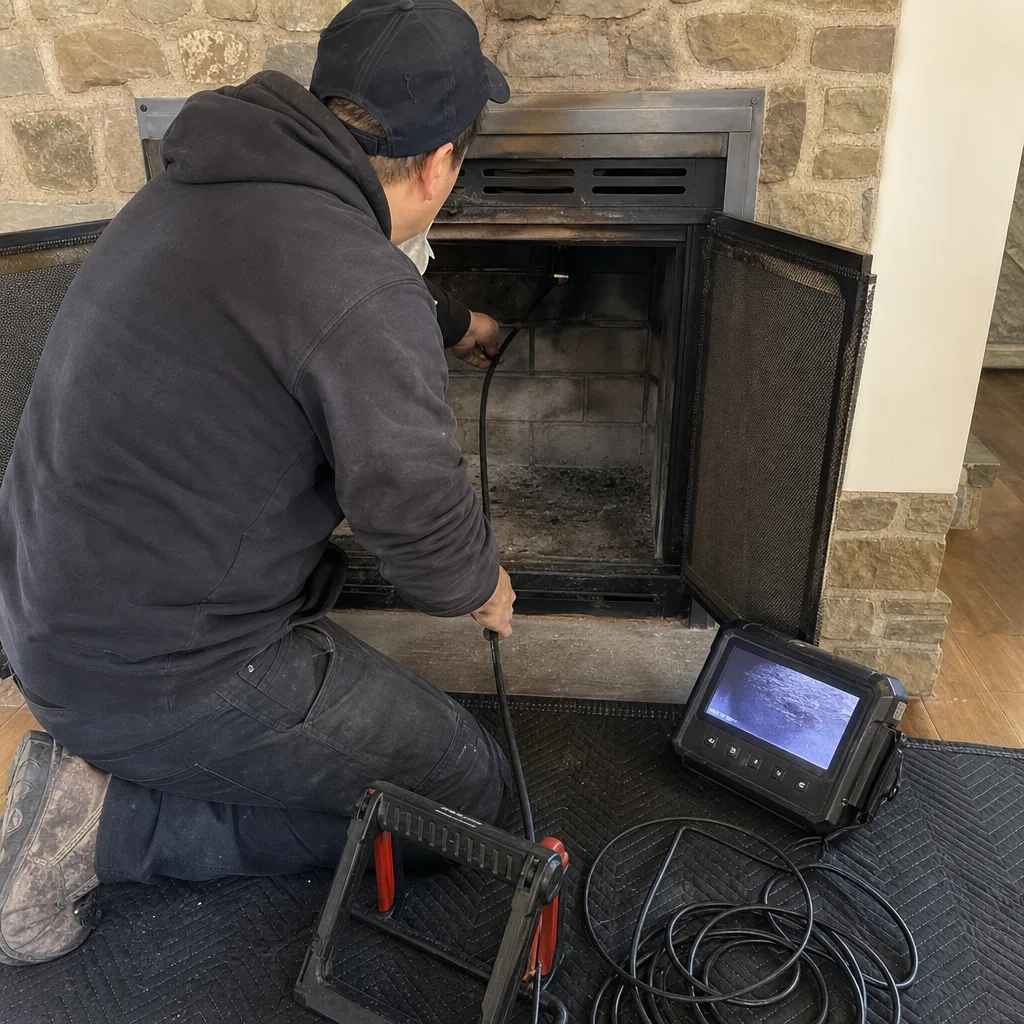
New York homeowners don’t have time for vague diagnostics. That’s why every one of our visits includes a Level 2 camera-scan inspection under NFPA 211, with footage you watch alongside our technician. You see the crack, the gap, the deteriorated clay tile. Then you get a written scope, a written price, and a written warranty before anyone touches the brick. Corrine Halstead built this company around a simple rule: nothing gets recommended without camera evidence the homeowner can see for themselves.
We’ve completed more than 38,000 inspections and cleanings since 2009, every single one documented with a photo record. That documentation standard, in place since our first year, became Clause 4 of the Haven Standard. Our New York crews are background-checked, uniformed, and assigned by name. You’ll get a text when they’re on the way, and a live person answers our phones 24/7.
Our Chimney Repair Services in New York
Mortar Repointing
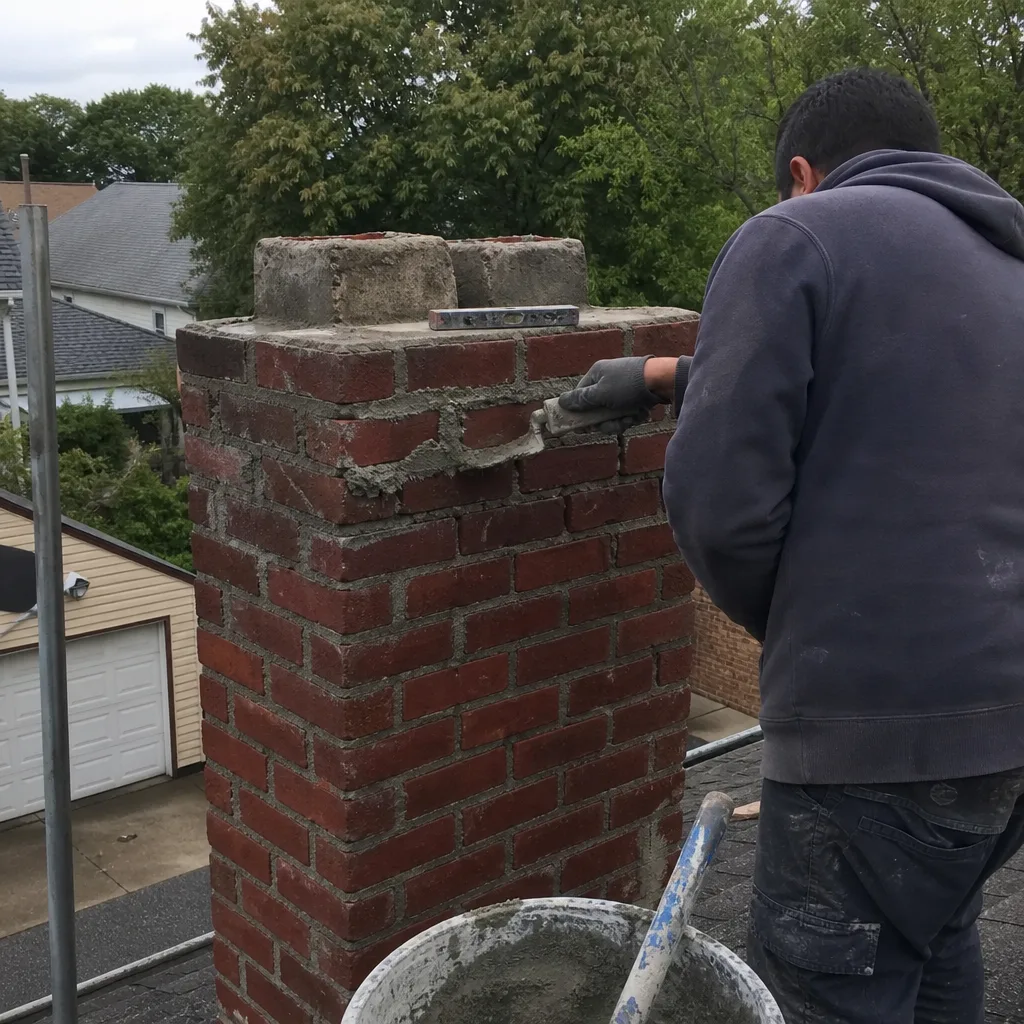
New York’s freeze-thaw cycles chew through mortar joints on exposed rooftop chimney sections. When mortar erodes, water gets behind the brick and accelerates spalling. We rake out failed joints on the visible faces and, on party-wall stacks in Brooklyn and Harlem, we also check the neighbor’s side. Repointing only half a shared stack is how you end up back on the roof in two years with the same leak. Typical repointing in New York runs $275-$800 depending on the square footage of the affected area and how much joint needs to be raked.
Spalling Brick Repair
Spalling is brick face popping off in flakes or chunks, usually from water intrusion and freeze damage. In waterfront neighborhoods like Red Hook and the Rockaways, salt air accelerates the process. We cut out the failed brick, replace with matched material where possible, and address the moisture source. A single spalled section might run $400-$900; if the damage runs deep into a shared party-wall stack, you’re looking at a more involved repair that may require the adjoining owner’s written consent before NYC DOB issues the permit.
Chimney Waterproofing
One of the most overlooked repairs in New York is also one of the cheapest. A breathable siloxane waterproofing treatment on a properly repointed stack prevents years of future damage. We apply waterproofing only after repairs are complete, because sealing over cracked mortar traps moisture inside the masonry. Expect $300-$750 for waterproofing on a standard New York rowhouse chimney. On multi-unit buildings with taller stacks, the cost scales with surface area.
Flashing Repair
Flashing is the metal seal where the chimney meets the roof. On New York’s flat and low-slope rowhouse roofs, failed flashing is the most common source of ceiling water stains around the chimney chase. We replace with copper or galvanized steel, step-flashed and counter-flashed properly. The repair runs $350-$950 for a standard single-stack penetration. If the roof membrane itself has failed around the flashing, that’s a roofer’s scope, and we’ll tell you that plainly rather than patch it and walk away.
What happens when you call
- 1
A real person answersNo phone trees - you reach a local pro.
- 2
You get an upfront price rangeHonest numbers before anyone is dispatched.
- 3
A background-checked tech heads outLicensed & insured, dispatched right away.
- 4
You approve before work beginsNothing starts until you say go.
 Before
 After
AfterTrusted Brands We Service in New York
When we install flue liners in New York, we use DuraFlex stainless steel systems sized to the exact BTU load of the appliance they serve, never a guess. For crown repair and waterproofing we work with Copperfield materials, and for resurfacing damaged flues we use HeatShield’s cast-in-place system. These aren’t the cheapest products on the market, but they’re the ones we’d put in our own chimneys. Our buying network keeps pricing honest for New York homeowners, and we stock common components locally so repair timelines don’t stretch out waiting on shipments.
Common Chimney Repair Problems We See in New York Homes
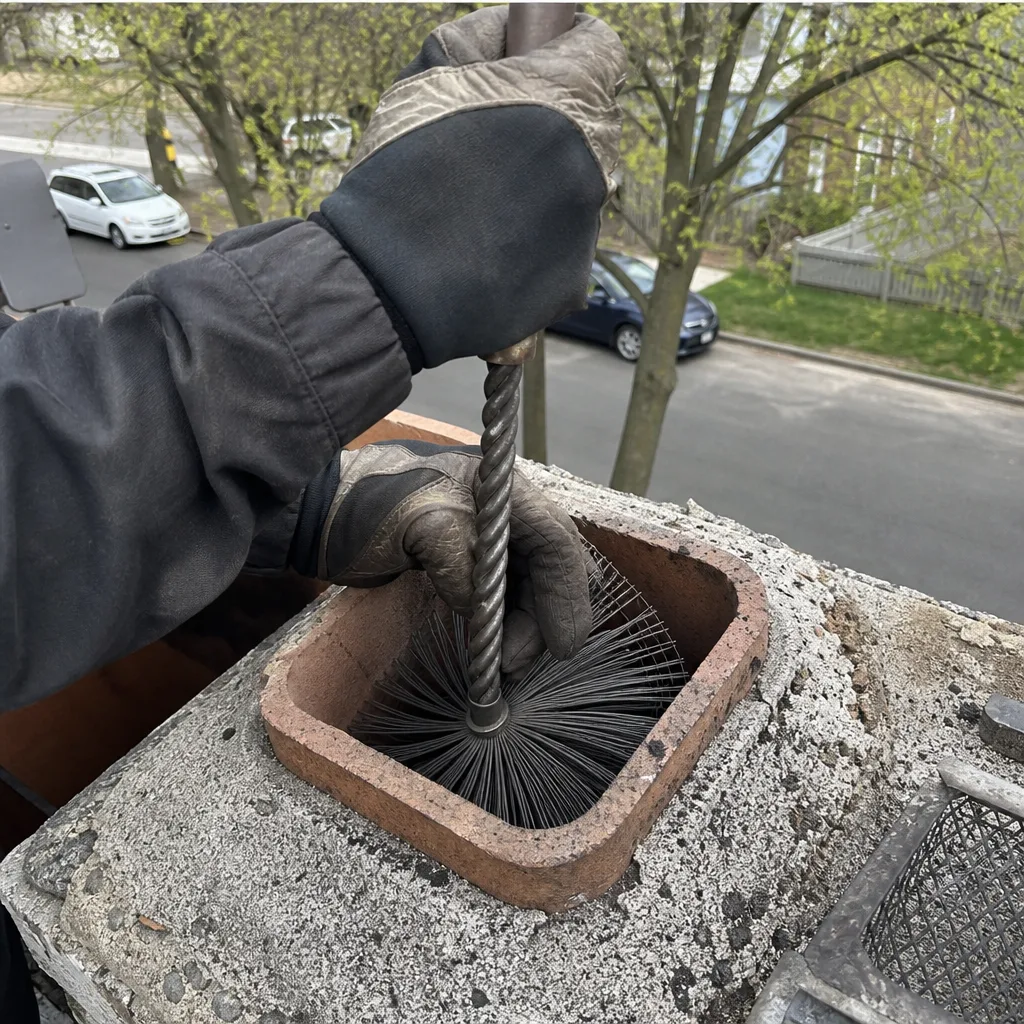
- Unlined flues in pre-war rowhouses. Most 1880s-1940s chimneys in New York were built to vent coal, then converted to oil or gas without the flue being relined. An unlined flue with porous mortar joints is a carbon monoxide pathway into living spaces. If your brownstone’s flue has never been lined, it needs a camera inspection to know what you’re actually working with.
- Party-wall stacks that were never maintained as a single structure. In Brooklyn and Harlem, two buildings frequently share one chimney stack. One owner repoints their half, the other doesn’t, and water migrates through the shared masonry. We see this constantly. Written consent from the adjoining owner is legally required before major repairs, and we walk you through the process.
- Heavy oil residue in boiler flues. Thousands of New York buildings burned No. 4 and No. 6 heating oil for decades. NYC Local Law 43 mandated phase-outs, but the tar-like deposits remain inside the flue. Standard creosote removal chemicals harden this residue instead of dissolving it. It requires mechanical scraping with different tooling, and anyone who treats it like wood-smoke creosote is wasting your money.
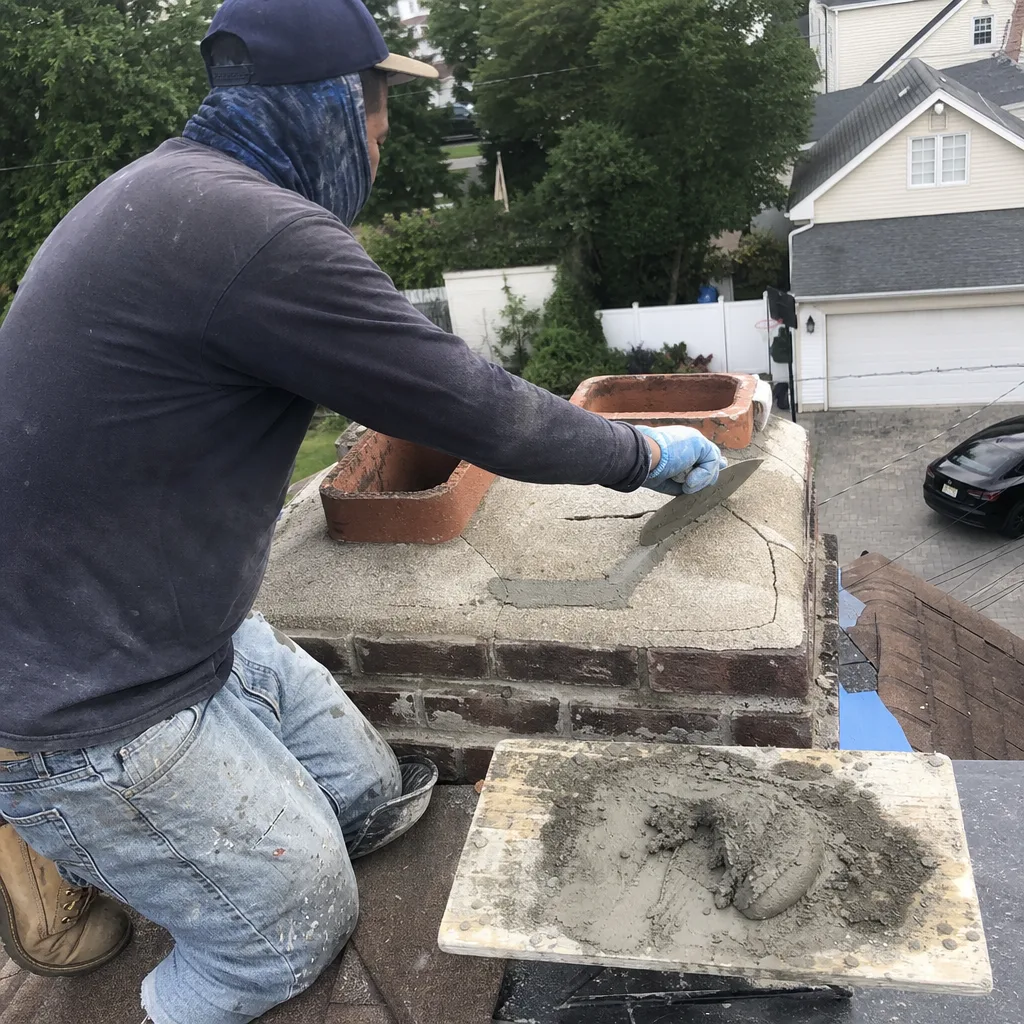
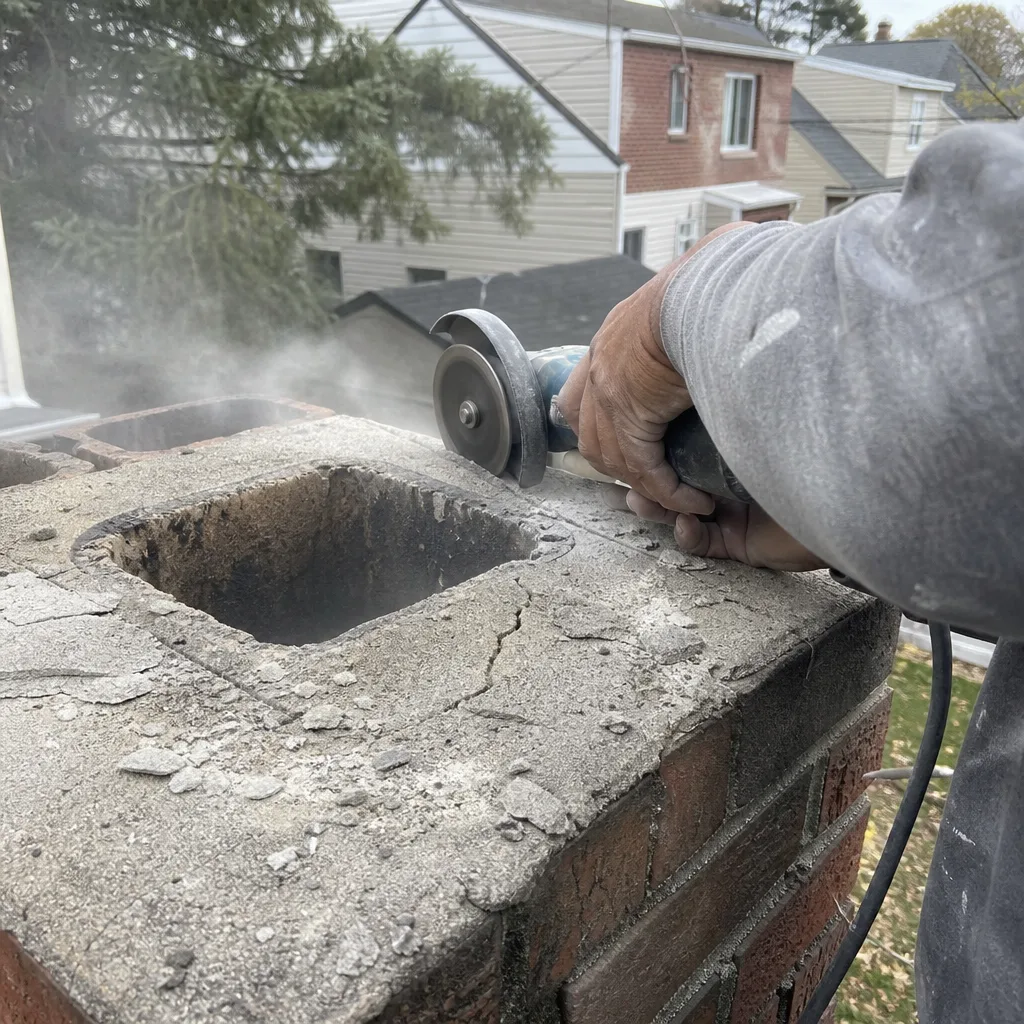
- Deteriorated crowns on exposed rooftop sections. The crown is the concrete cap at the top of the chimney. New York’s coastal humidity and winter freeze cycles crack crowns within ten to fifteen years. A cracked crown lets water pool and drain down the flue, accelerating damage to the liner and the smoke chamber below. Crown rebuilds run $900-$2,200 depending on the stack’s footprint.
Pricing for Chimney Repair in New York, NY
New York pricing runs higher than the national average because of permit requirements, board approval delays, and the sheer difficulty of accessing rooftop stacks in attached rowhouse blocks. But the labor itself is straightforward, and you should never be quoted without first seeing the problem on camera. Here’s what we charge, in writing, before work starts:
- Mortar repointing: $275-$800
- Flashing repair: $350-$950
- Chimney waterproofing: $300-$750
- Spalling brick repair: $400-$900
- Flue liner installation (DuraFlex): $1,200-$4,500
- Crown rebuild: $900-$2,200
That’s the honest range for New York. The final number depends on what the camera shows. Bring us a competitor’s written estimate and we’ll give you a free second opinion, no obligation. Call (516) 240-9612 to schedule.
We Also Serve Cities Near New York
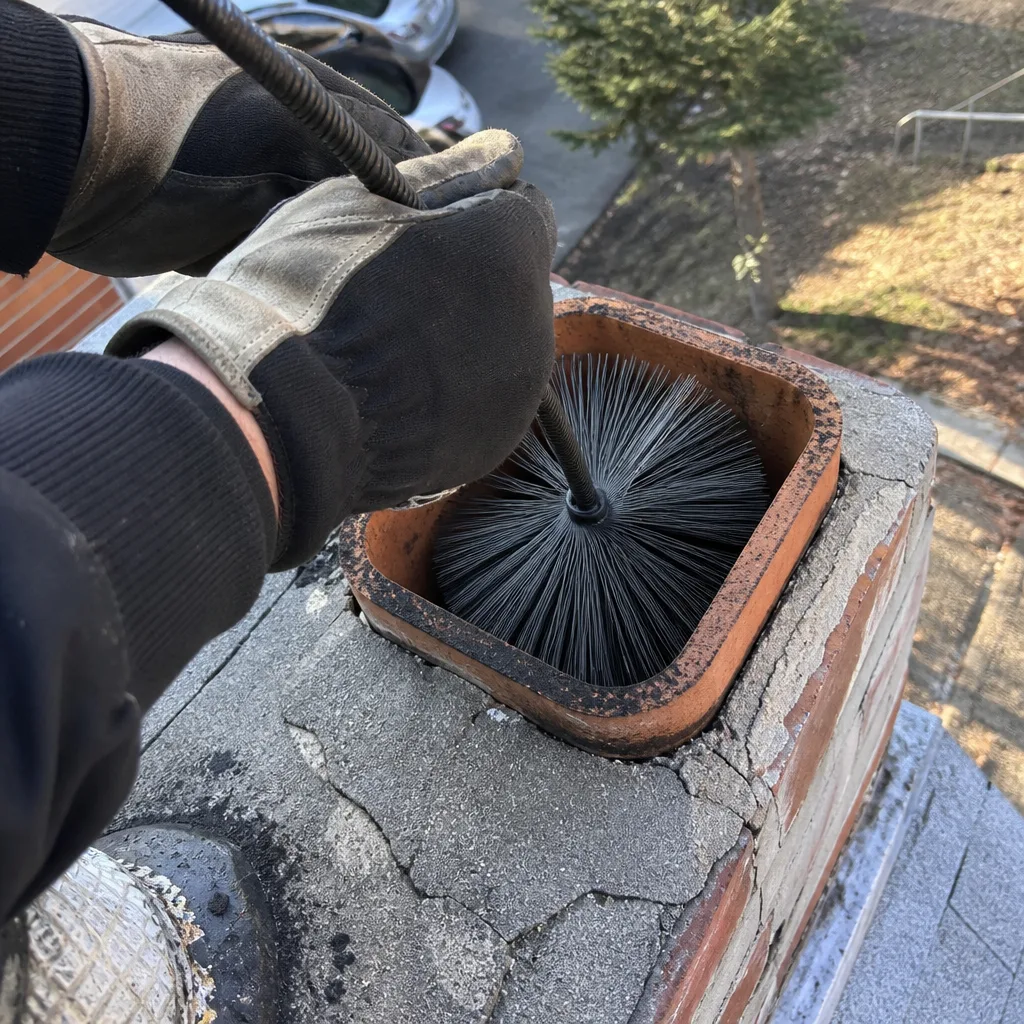
Our crews handle Chimney Repair work throughout the five boroughs and nearby neighborhoods, including Long Island City, Astoria, Elmhurst, and Middle Village. If you’re outside those areas, call anyway. Dispatch and scheduling are coordinated from our New York City office, so we can tell you before you hang up whether we cover your block. See our full New York service area for details.
Serving New York, NY - Our Local Coverage Area
We’re based in the New York area and know this community well. Use the map below to see our service coverage - if you’re nearby, we can almost certainly help.
FAQs - Chimney Repair in New York
Yes. If a chimney stack serves two attached buildings and the repair touches shared masonry, NYC DOB typically requires written consent from the adjoining property owner before issuing a permit. We’ve managed this on dozens of jobs in Park Slope, Bed-Stuy, and Hamilton Heights. It adds time, but skipping it puts you legally exposed and can get the permit pulled mid-repair. We’ll tell you exactly what paperwork is needed and help you get it signed. Call (516) 240-9612 and ask for Corrine Halstead’s team.
Because your building burned No. 4 or No. 6 heating oil for decades before NYC Local Law 43 forced phase-outs. These oils left a dense, tar-like residue inside the flue that hardens into a glassy coating when exposed to standard creosote removal chemicals. It requires mechanical scraping with different tooling. If a chimney company treats it like wood-smoke creosote and charges for a standard chemical sweep, you’ve paid for nothing. We’ll show you the residue on camera before recommending the right removal method.
Start with the symptoms: water stains around the ceiling near the chimney chase, flaking brick or mortar on the rooftop section, a boiler that drafts strangely or sets off carbon monoxide alarms, or a neighbor’s report that the shared stack has visible damage. The definitive answer comes from a camera inspection. We feed a camera down the flue and show you the footage in real time. For co-op and condo buildings, we coordinate with the board and the super, and we provide the documented photo record boards need to approve the scope.
Yes, and this is the most common reason a single-flue repair turns into a failed inspection. In pre-war apartment buildings, one masonry stack often contains four to six separate flues. If a liner is sized for one unit’s boiler without accounting for the other flues still venting through the same stack, you can create draft reversal and carbon monoxide backdraft into other apartments. We inspect the whole stack, not just the unit that called us, and we document every flue’s condition before recommending anything.
Salt air plus freeze-thaw cycling. In waterfront neighborhoods like Red Hook, Coney Island, and the Rockaways, salt deposits settle on exposed brick and draw moisture deeper into the masonry. When winter temperatures drop below freezing, that water expands and pops the brick face off. Waterproofing after proper repointing slows the process, but spalling brick already needs replacement, not just a sealant. We cut out the failed brick, match it where possible, and address the water source. Call (516) 240-9612 for a camera inspection and a written quote.
Written by Corrine Halstead, Owner at Level Two Chimney Jamaica, serving New York City under the Haven Standard.