
Last updated September 20, 2026
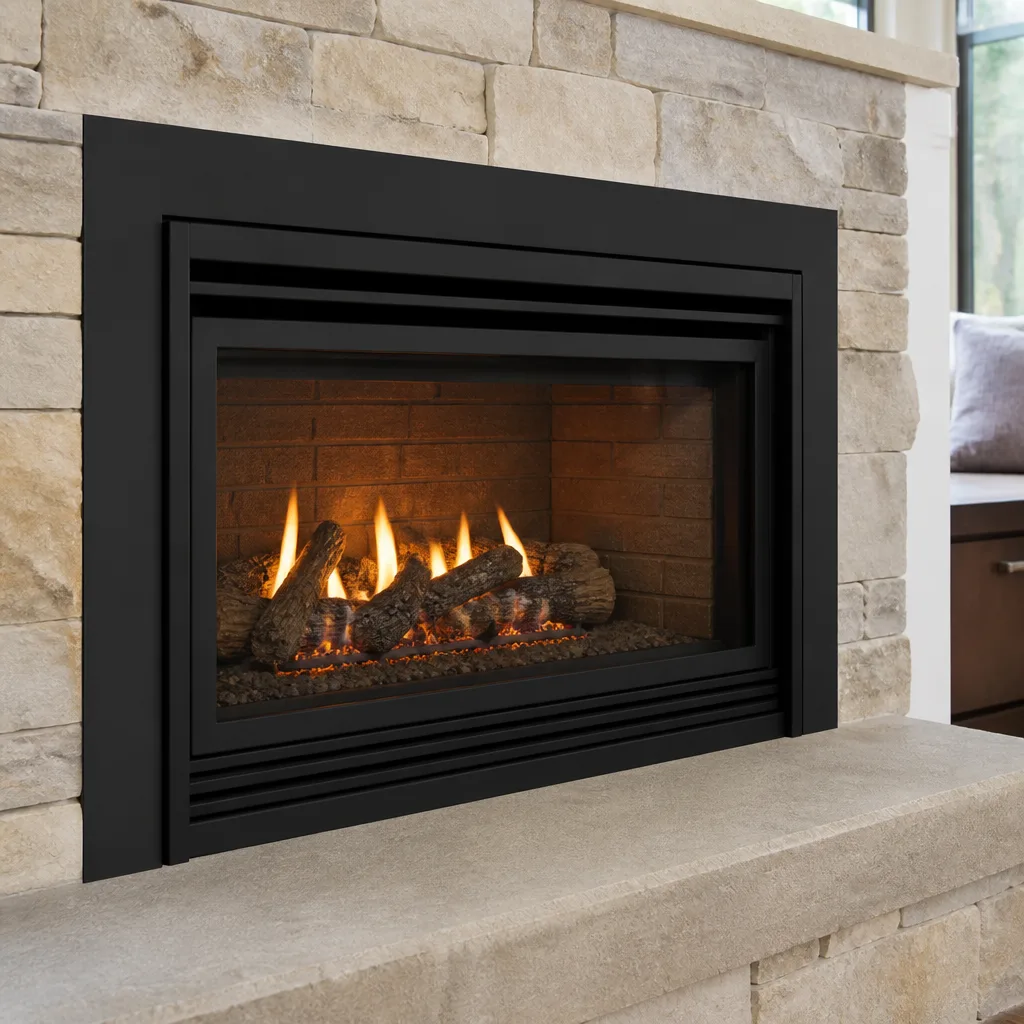
Level 1 sweep and inspection to the NFPA 211 annual standard - flue, crown, cap, and flashing checked and photographed
Chimney sweep logs do not sweep chimneys. They loosen some creosote - which then falls where a brush and vacuum still have to collect it.
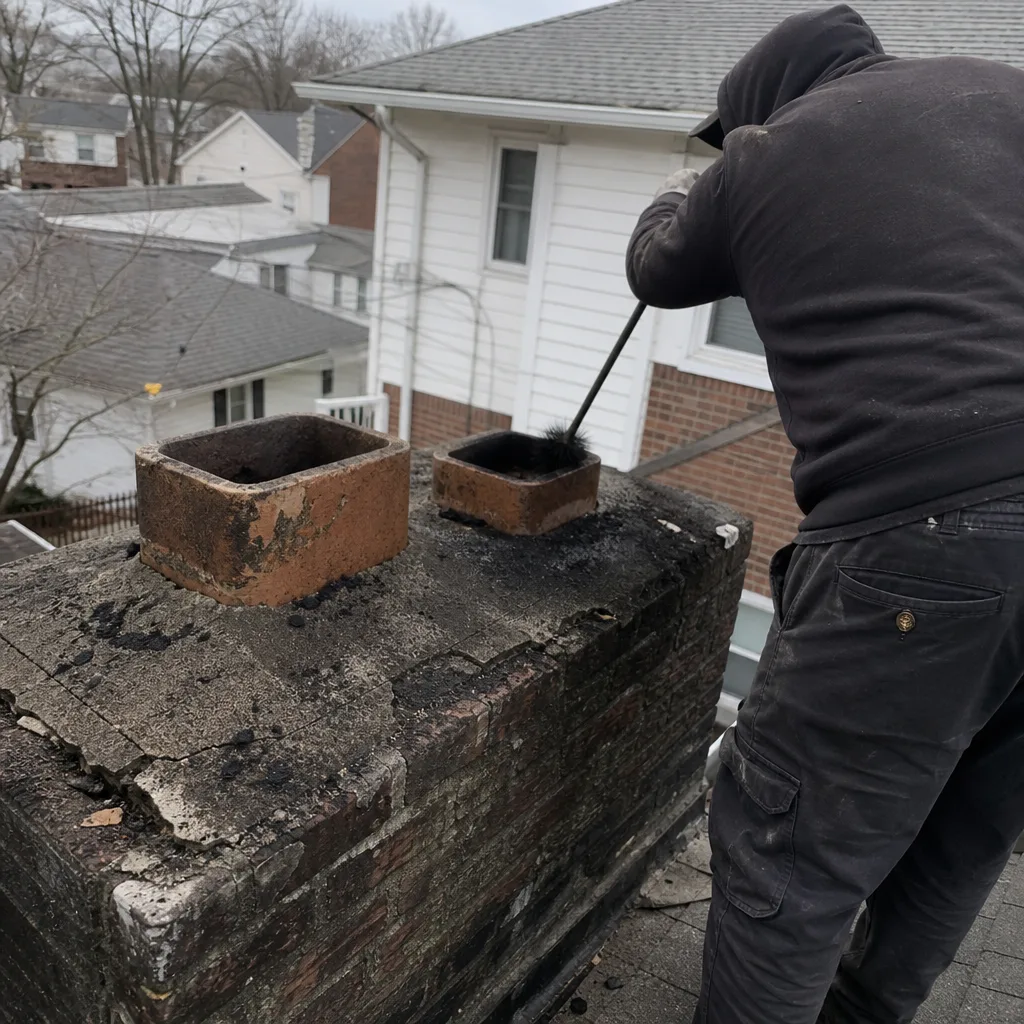 Before
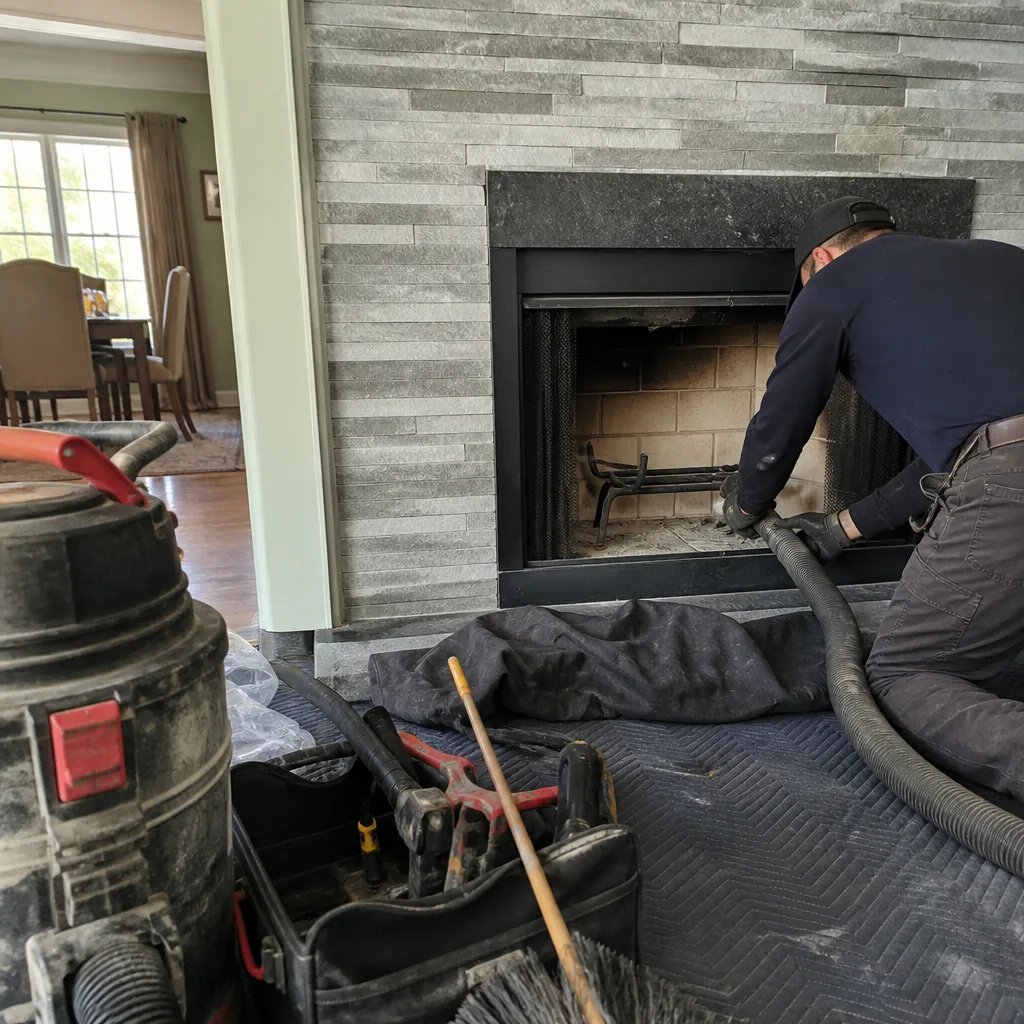 After
After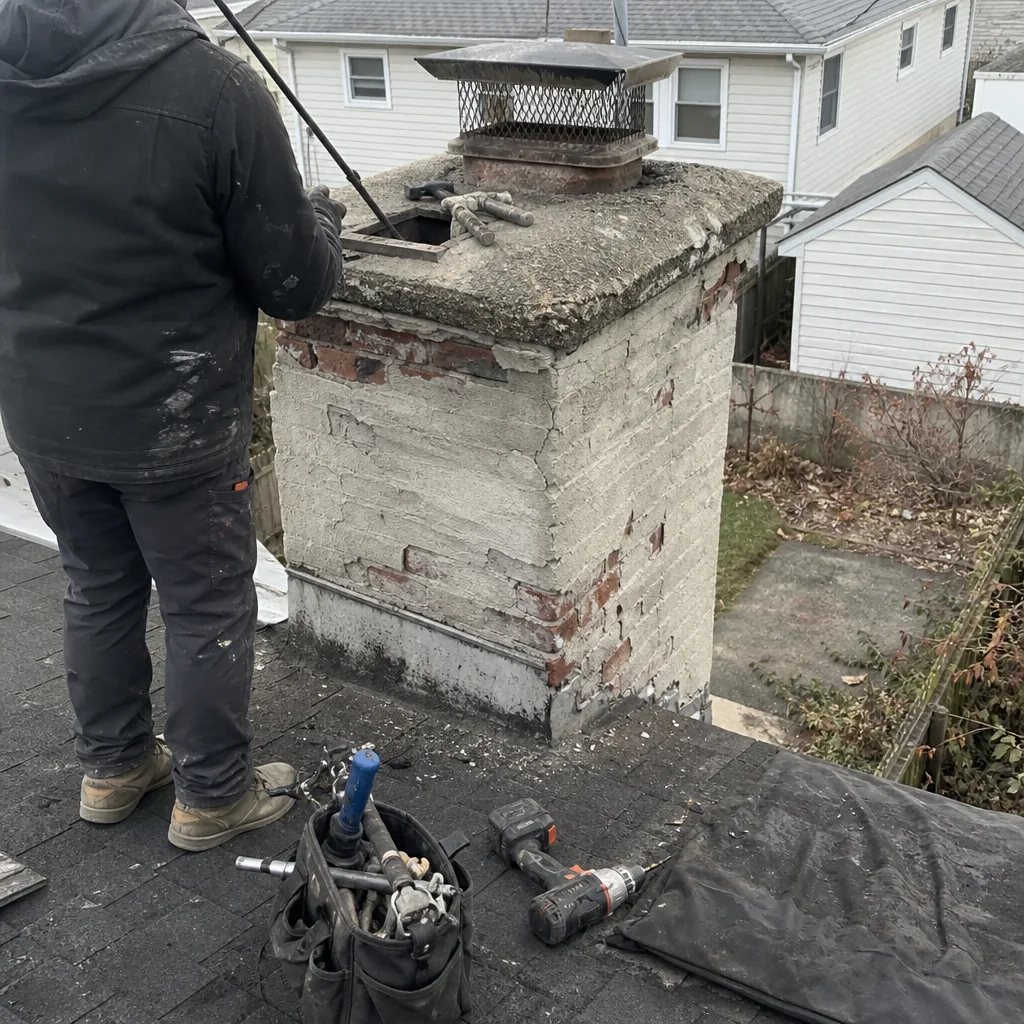 Before
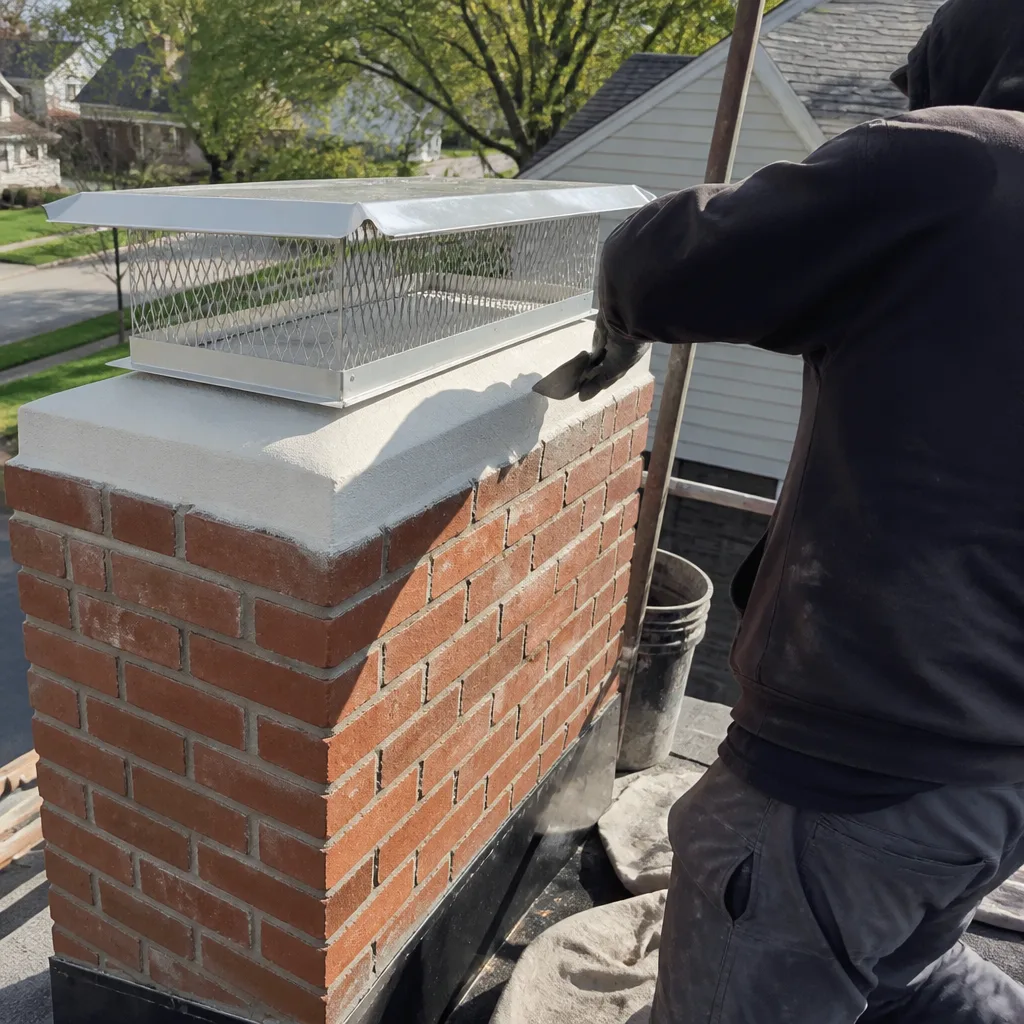 After
After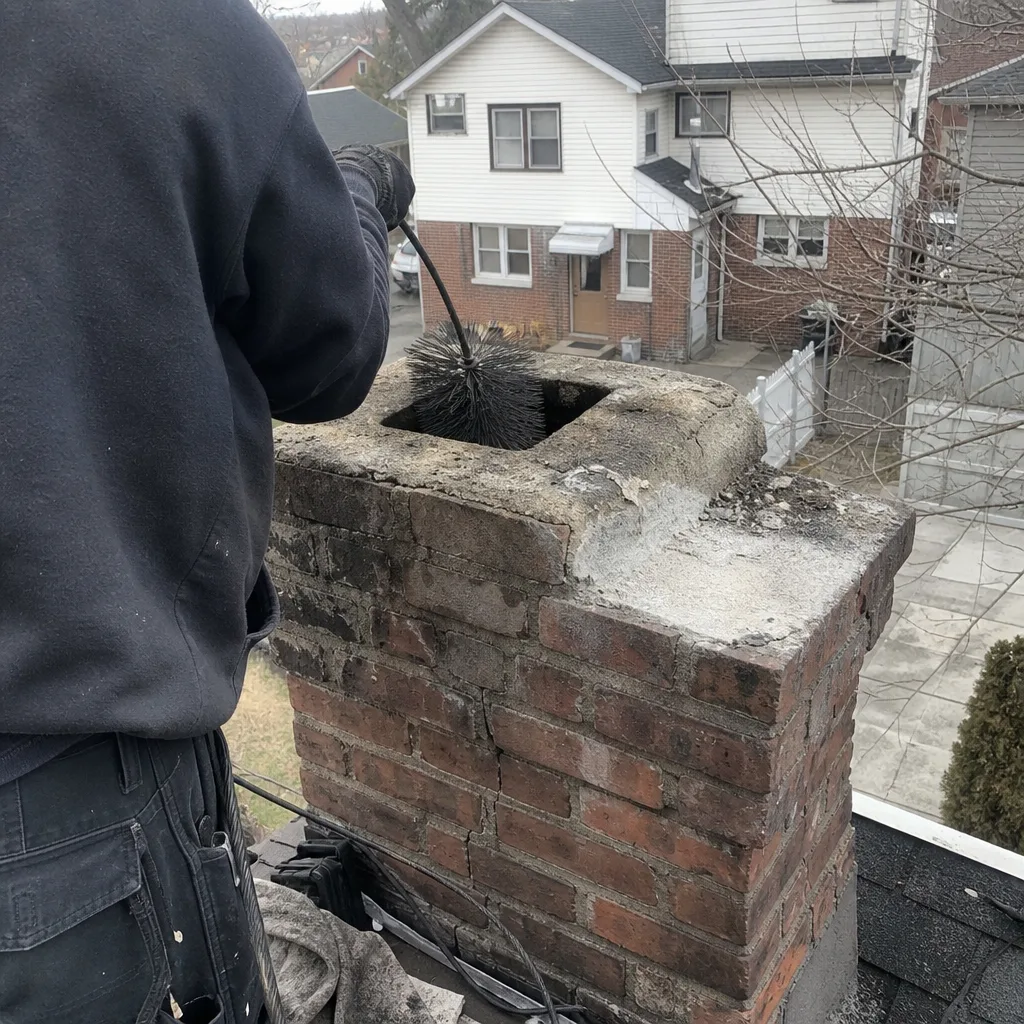 Before
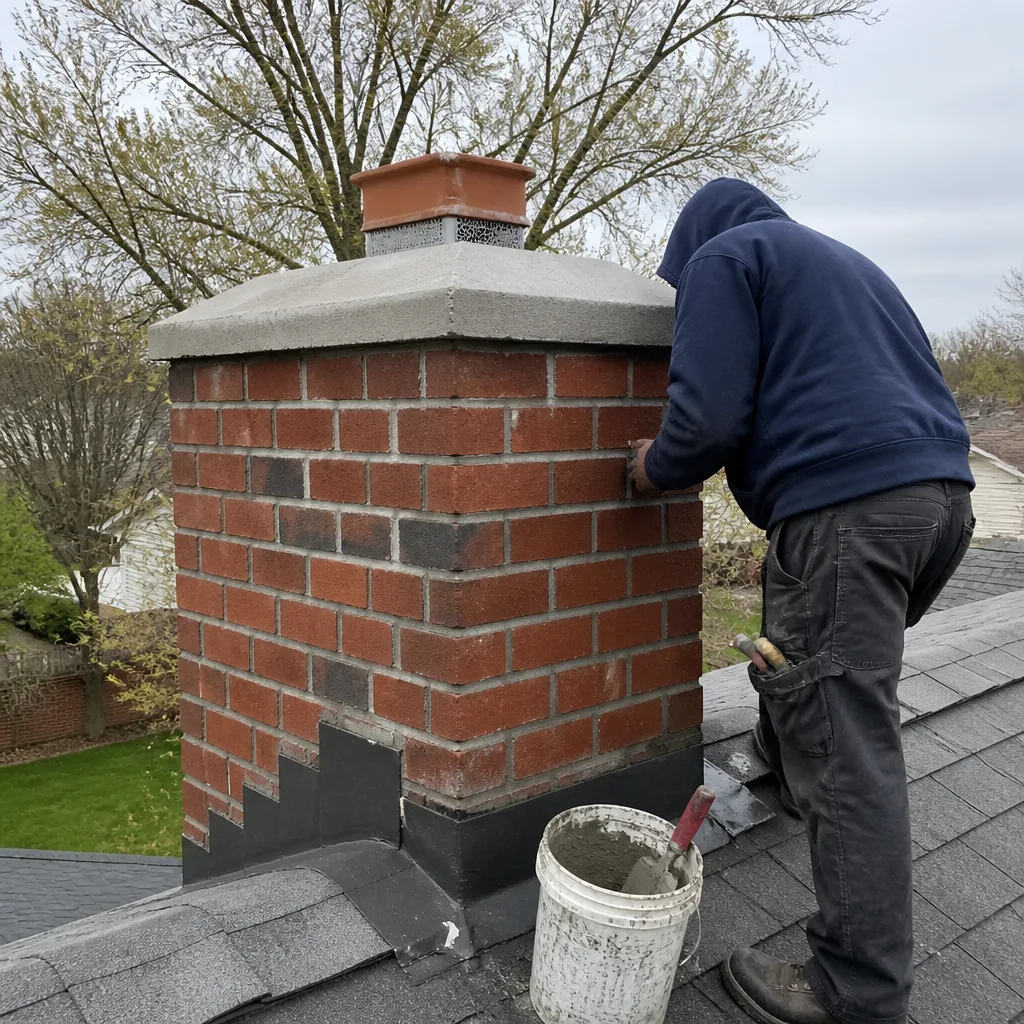 After
AfterHow to Hire a Chimney Cleaning Contractor in Jamaica: A Step-by-Step Guide
The chimney and fireplace industry doesn’t publish a “most common way homeowners get burned” report, but if it did, the top entry would not be a bad sweep job. It would be the moment a homeowner approves a repair based on a verbal description of damage they never saw, with a price they never got in writing, from a company whose warranty terms were never stated until the bill arrived. This guide is built from 38,000+ chimney inspections and cleanings across Jamaica since 2009, and it will teach you the exact questions, document requests, and verification steps that separate a legitimate chimney contractor from a sales operation in a van. For more guides & resources on protecting your home, see our blog. By the end, you will know how to hire a chimney cleaning contractor in Jamaica with the same confidence you would hire an electrician or a plumber: by the paper trail they volunteer before you ever hand them a deposit.
Quick Answer
To hire a chimney cleaning contractor in Jamaica, NY, request a written scope of work, a written flat price, and written warranty terms before scheduling, then verify the contractor’s NYC Department of Buildings license and liability insurance yourself using the DOB website and a Certificate of Insurance sent directly from the contractor’s insurer. A legitimate chimney cleaning in Jamaica costs between $199 and $349 for a standard open-flue fireplace, includes a camera inspection with photo documentation you get to keep, and never requires an immediate same-day approval of repairs.
Table of Contents
- The Real Problem: Credentials Don’t Predict Contract Behavior
- The Three Documents to Request Before You Schedule Anything
- How to Verify a Jamaica Contractor’s License and Insurance in Under 10 Minutes
- Camera Inspection: What a Legitimate Scan Actually Shows
- What Chimney Cleaning in Jamaica Actually Costs
- Red Flags Specific to the Jamaica Market
- The 7 Questions to Ask Before Booking
- Common Mistakes to Avoid
- When to Call a Professional
- Frequently Asked Questions
- The Bottom Line
 Before
 After
AfterThe Real Problem: Credentials Don’t Predict Contract Behavior
CSIA certification tells you a technician passed a written test on fire codes and creosote chemistry. It says nothing about whether they’ll give you a written price before they go up on the roof, or a camera image of what they found after. Those two behaviors, not test scores, are what actually protect you when a sweep finds a cracked flue liner and asks for another $4,000.
We’ve spent sixteen years inside Jamaica’s chimney market, and here is what the pattern looks like. Companies fail homeowners not because their technicians are incompetent, but because their contract structure is designed for ambiguity. The price is verbal. The scope is verbal. The warranty is verbal. Then something gets found, a repair gets suggested, and suddenly the only things that are written down are the invoice and the lien waiver. That is the whole game. The credential on the truck was never the problem. The absence of enforceable paper was.
This guide reframes the hiring question entirely. Do not ask “Are they certified?” Ask: “Will they put the price, the scope, and the warranty in writing before any work begins?” A company that says yes, without hesitation, has passed a test that no credential board administers. That is the contract structure test, and it will filter out the problem companies faster than any badge check.
Jamaica’s housing stock makes this test particularly relevant. The neighborhood’s prewar brick rowhouses and midcentury frame homes often have original masonry chimneys that have absorbed eighty years of freeze-thaw cycles, and many homeowners here are the first owners in decades to actually inspect the interior flue. That means the inspection findings carry more weight, and the temptation to exploit them is higher. A camera image is the only thing that turns a sales pitch into a diagnosis. When a contractor in Jamaica will not show you the image, the pitch is the point.
The Three Documents to Request Before You Schedule Anything
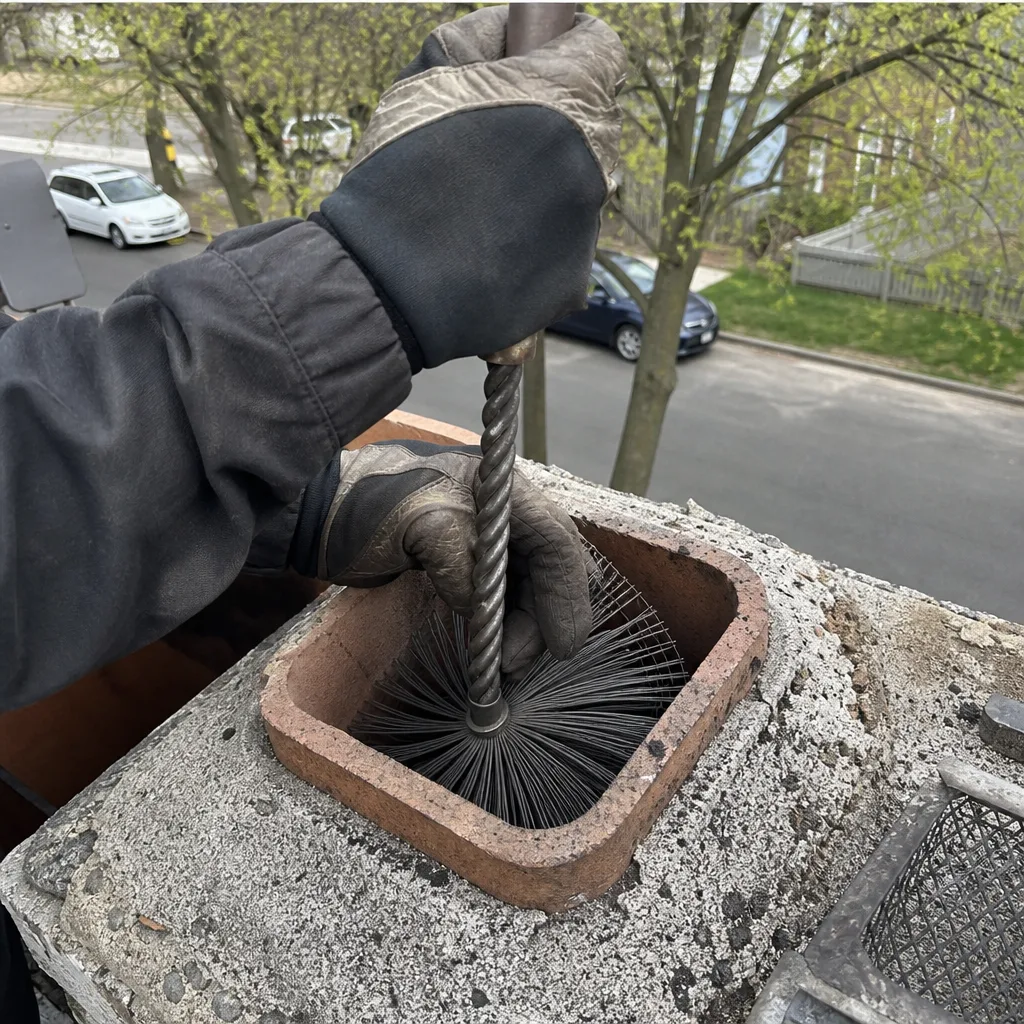
Before you book a chimney cleaning in Jamaica, there are three documents you should request. If a contractor hesitates on any of them, end the conversation. It will save you money and frustration. Here is exactly what to ask for and what makes each document enforceable.
1. Written Scope of Work
This is a one-page document that names exactly what the contractor will do: sweep the flue, remove creosote from the smoke chamber, inspect the crown, run a camera scan, dispose of debris, and so on. The enforceable language to look for is specificity. “Chimney cleaning” is not a scope. “Sweep the full interior flue from the firebox to the termination cap, vacuum the smoke chamber and firebox, and perform an NFPA 211 Level 2 camera inspection of the full flue liner” is a scope. The second one gives you recourse. The first one is a blank check.
2. Written Price
The price should be a flat number in dollars, written on the same document as the scope, with any variables itemized as line items. Not a range. Not “starting at.” A flat price tied to a defined scope. If the contractor says the price depends on what they find, the correct response is: “Then your camera inspection finds it first, and you quote me a written price for any additional work before you touch it.” That is the entire structure of how chimney cleaning and sweep work in Jamaica should operate. A contractor who pushes back is telling you their business model depends on finding things you cannot verify.
3. Written Warranty Terms
Ask: “What happens if I am not satisfied with the cleaning, or if the repair fails in six months?” The answer should be specific enough to be enforceable in small claims court. “We’ll make it right” is a sentiment. “Any repair work performed by our company is warranted for 365 days, and if it is not done right we will return and correct it at no additional charge” is a contract term. At Level Two, we call this the 365-Day Done Right Promise, and it is stamped on every job under the Haven Standard. Clause 1 of the Haven Standard requires one more thing on top of these three: a written price, a written scope, and a written warranty delivered before anyone starts, not after the tech is already in your home. Ask for all three, in writing, and you have already filtered out the bottom half of the market.
How to Verify a Jamaica Contractor’s License and Insurance in Under 10 Minutes
Queens is in the five boroughs, which means your contractor answers to the NYC Department of Buildings. A company operating in Jamaica without a valid DOB license is working illegally, and if they damage your property you will have a much harder time recovering anything. Here is the step-by-step, and it takes less than ten minutes.
- Search the NYC DOB licensee database. Go to the DOB website and use the “Licensee Search” tool. Enter the company’s business name or license number. The tool will show you the license type and expiration date. For chimney work, you want a valid Home Improvement Contractor (HIC) license, which is the standard for this trade in New York City.
- Confirm the license number matches the page. Any legitimate contractor will have their license number printed on their website, their truck, or their truck signage. If the number on the DOB database does not match what they advertise, or if they are cagey about sharing it, walk away. Level Two Chimney Jamaica’s home page displays license information at the bottom of every page, and it will match the DOB record exactly.
- Request a Certificate of Insurance (COI). Ask for a COI that names the contractor as the insured, shows general liability coverage of at least $1 million, and lists the policy period as active. Then call the insurance company directly, or use the insurer’s online verification tool, and confirm the policy is in force. A real COI includes the insurer’s phone number and policy number, and the insurance broker’s contact information. If the contractor provides a COI without those details, it may be fabricated.
- Check the contractor’s name on the COI. The named insured on the COI must match the name on the DOB license and the name on the written estimate. Subcontracting chains and name mismatches are how liability gets dodged.
- Write down the date you verified everything. This is your paper trail. If a dispute arises later, the date you confirmed coverage and licensure is the date your case started. A documented verification always beats a recollection.
For Jamaica homeowners specifically, the DOB license carries extra weight because so much of the neighborhood’s housing stock is attached or semi-attached. A chimney fire in a rowhouse on 164th Street does not affect just one house. The person next door shares the party wall. A contractor without proper liability insurance is not just your risk. It is the risk of everyone attached to your structure.
Camera Inspection: What a Legitimate Scan Actually Shows
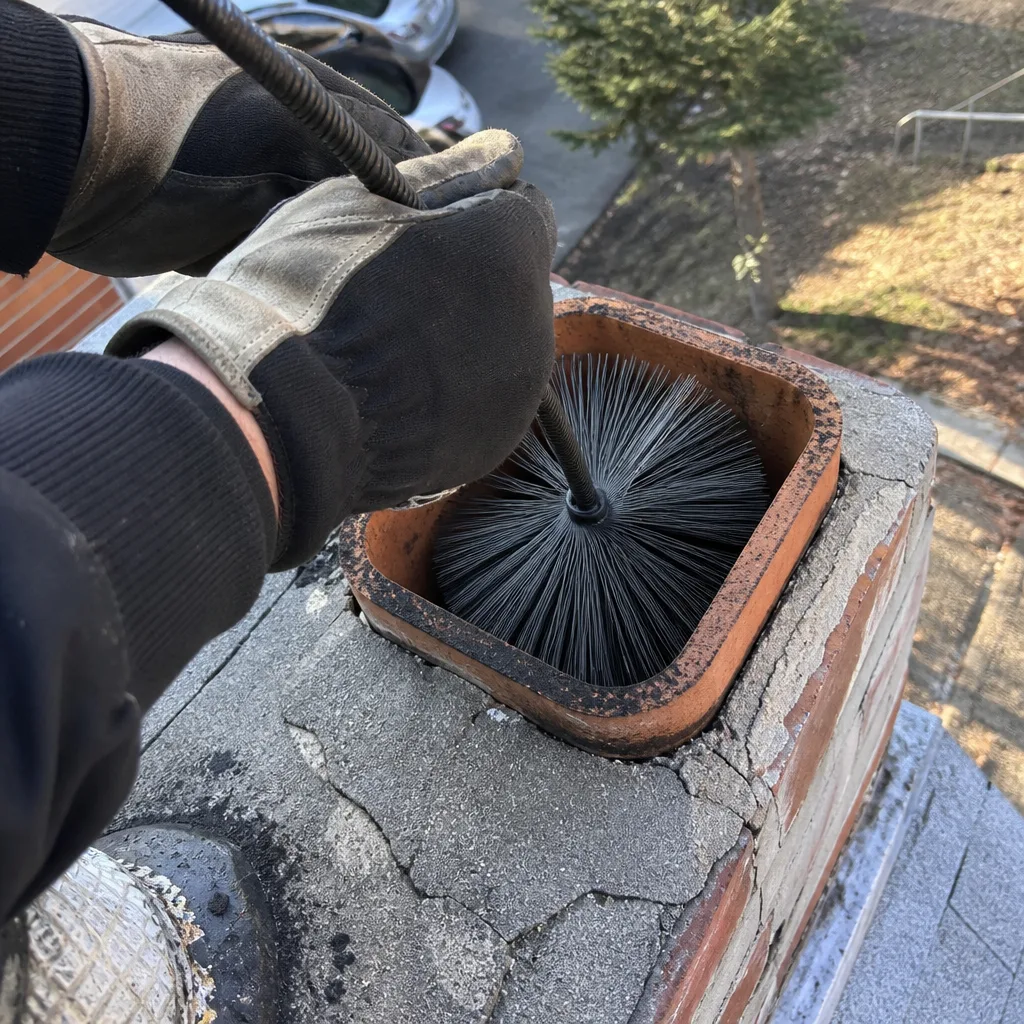
Not all camera inspections are equal, and the gap between a real scan and a token image is where homeowners in Jamaica get maneuvered into thousands of dollars of unnecessary work. Here is what a legitimate NFPA 211 Level 2 camera inspection looks like, and what to demand from any contractor offering one.
Duration. A full Level 2 camera scan of a residential flue takes 20 to 30 minutes. It covers the full interior surface of the flue liner, from the firebox throat to the termination cap, and it includes still images captured at regular intervals plus a continuous video feed. If a technician is back from the roof in ten minutes with a verbal summary and no images, they did not do a Level 2 scan. They did a flashlight look.
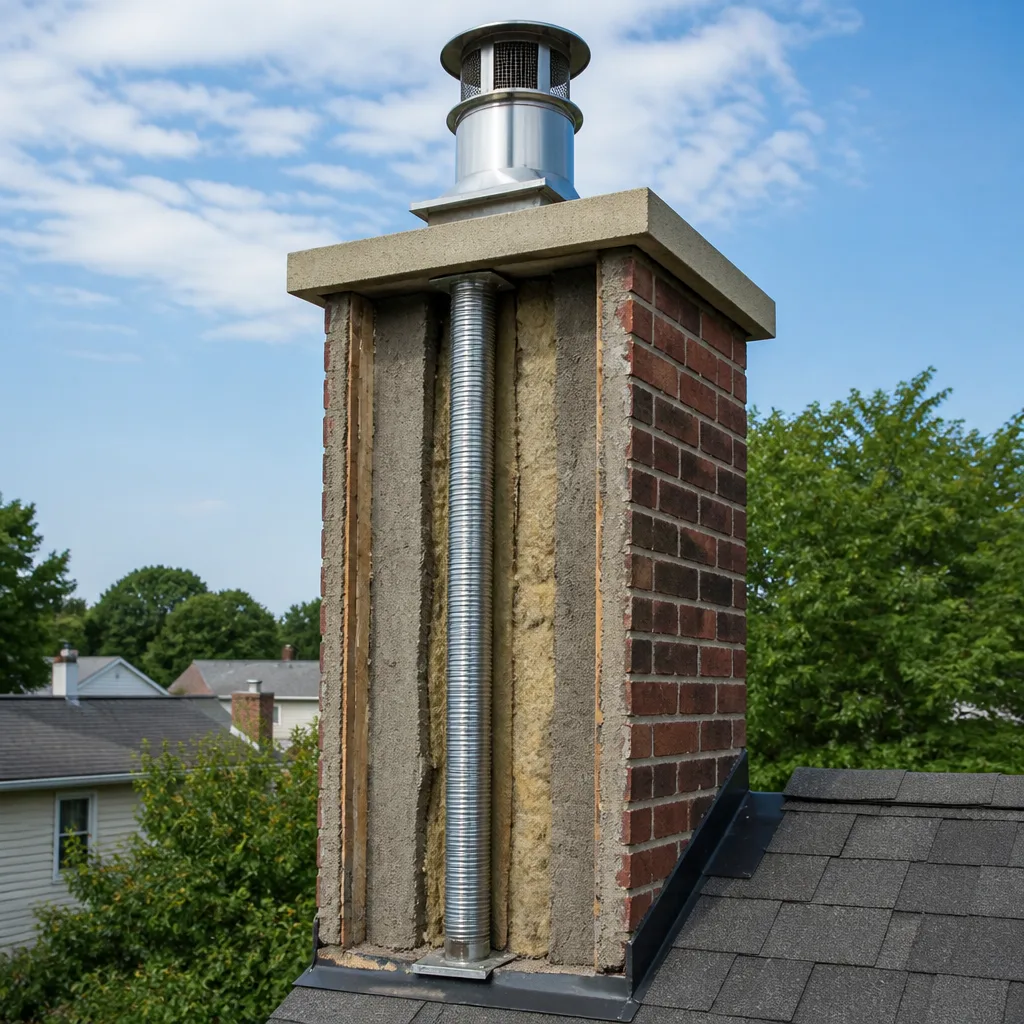
What the images show. A legitimate scan captures the liner material (terra cotta, stainless steel, cast-in-place), the condition of the mortar joints between liner sections, any cracks or spalling (flaking or chipping of the liner surface), the condition of the smoke chamber (the funnel-shaped section above the firebox), and the integrity of the flue cap and crown. You should be able to see, with your own eyes, the condition of the interior surfaces. If the contractor describes what they saw but cannot or will not show you the image, you have not received an inspection. You have received a claim.
The documentation you walk away with. Clause 4 of the Haven Standard requires a documented photo record on every visit, and that archive practice has been running continuously at Level Two since 2009, years before regulators or insurers asked for it. You should receive a set of time-stamped images or a video file, either by email or on a thumb drive, covering the full flue length. More than 38,000 chimneys inspected and cleaned since 2009, every one with a written price before work started and a documented record when it was done. That is the standard. If a contractor will not give you the images afterward, ask why. There is no honest answer.
Why verbal summaries are worthless. “Your liner is cracked” is a claim. A time-stamped image showing a 14-inch vertical crack through the inner wall of the flue liner, with the mortar joint separation visible, is a diagnosis. We have seen homeowners in Jamaica approve $6,000 liner replacements based on nothing more than a technician’s description, and we have seen those same homeowners cancel the job once we showed them the actual interior scan and explained, in plain terms, that a hairline surface crack in a terra cotta liner is often cosmetic and does not require immediate replacement. The image is the only tool you have to prevent that. Demand it.
What Chimney Cleaning in Jamaica Actually Costs
Jamaica’s market sits at the intersection of Queens pricing reality and the national chimney service range, and the result is predictable: the standard sweep price runs from $199 to $349 for a typical open-flue fireplace, with the median around $279. Here is the line-item breakdown for what you should expect to see on a written estimate in Jamaica.
- Standard chimney sweep and Level 2 camera inspection: $199-$349, depending on flue height, creosote load, and access difficulty. This is the base service, and it should include the photo record as a standard part of the price, not an add-on.
- Heavy creosote or Class III removal surcharge: $75-$150, applied when the flue has not been swept in years and the creosote has glazed into a hardened, tar-like layer that requires chemical treatment or a rotary head with a wire brush. This is an extra because it adds time and tooling.
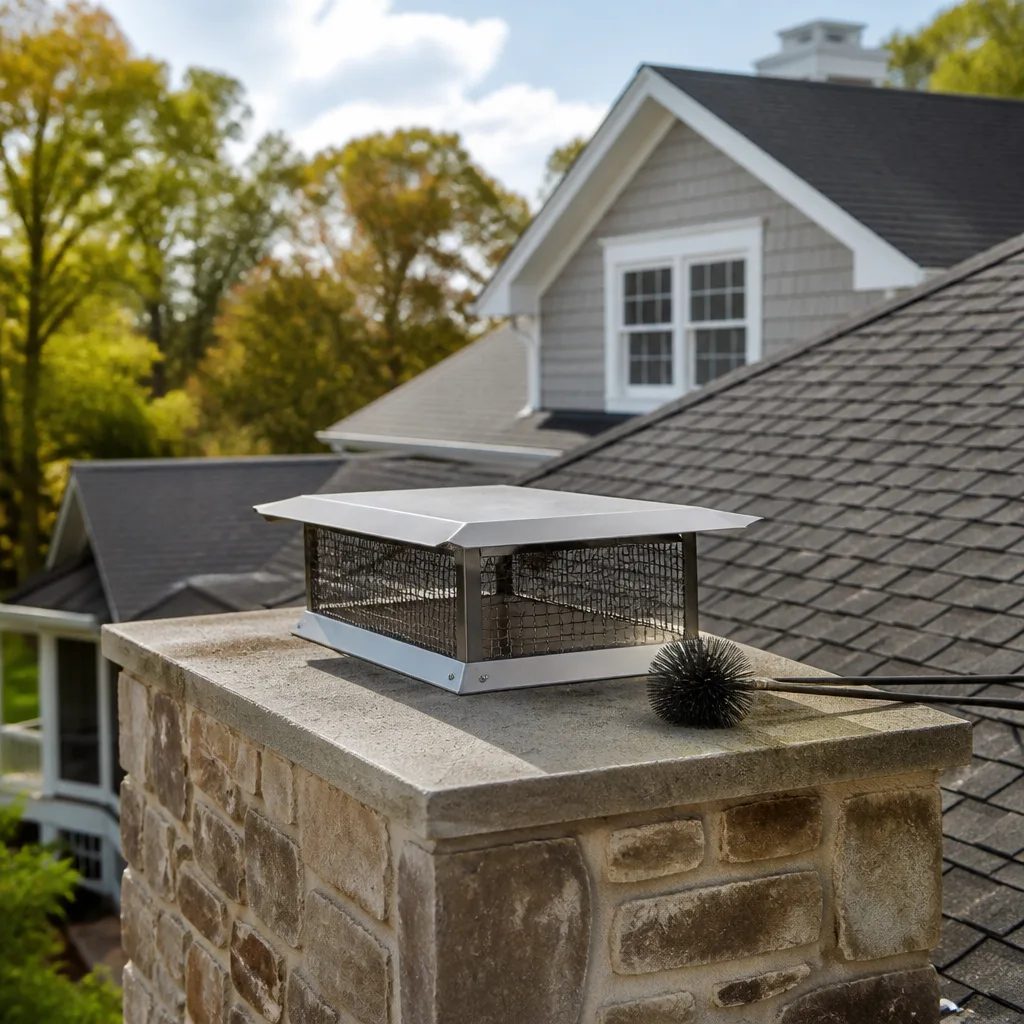
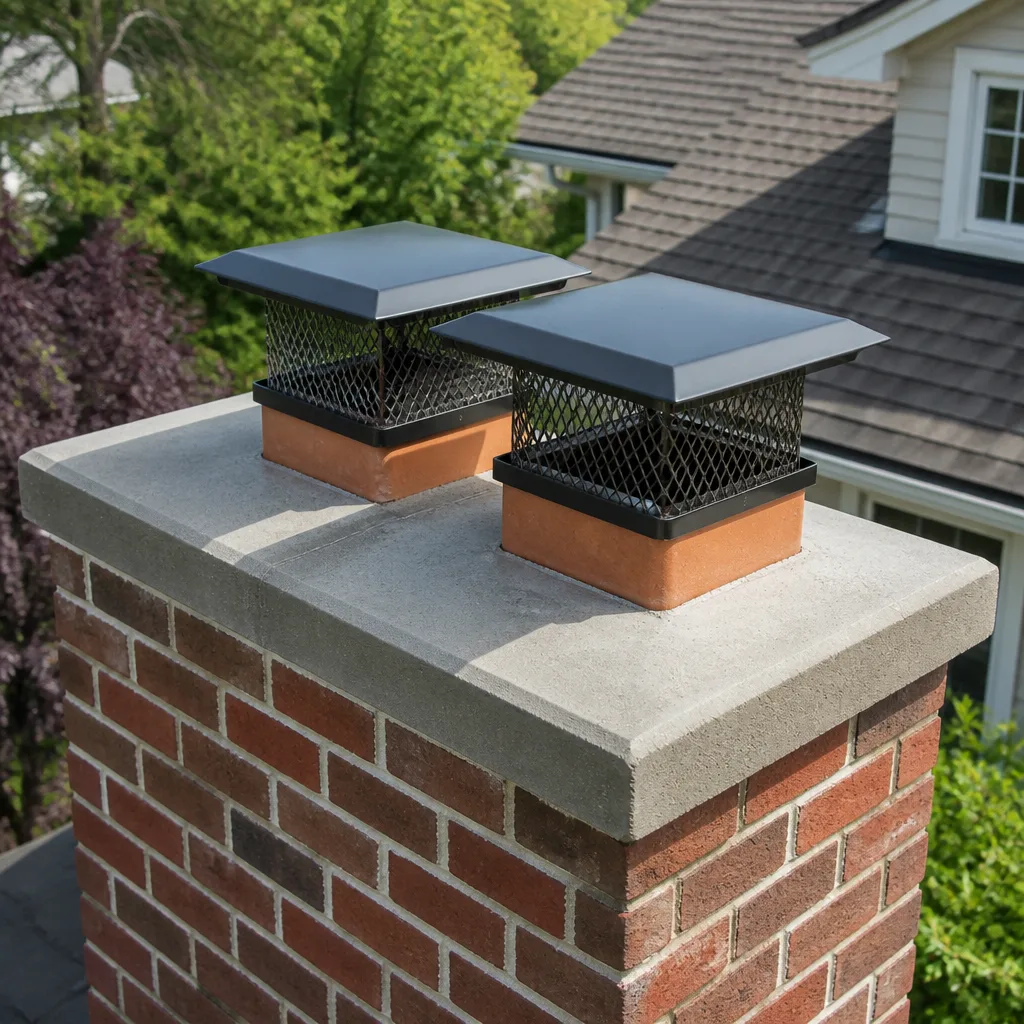
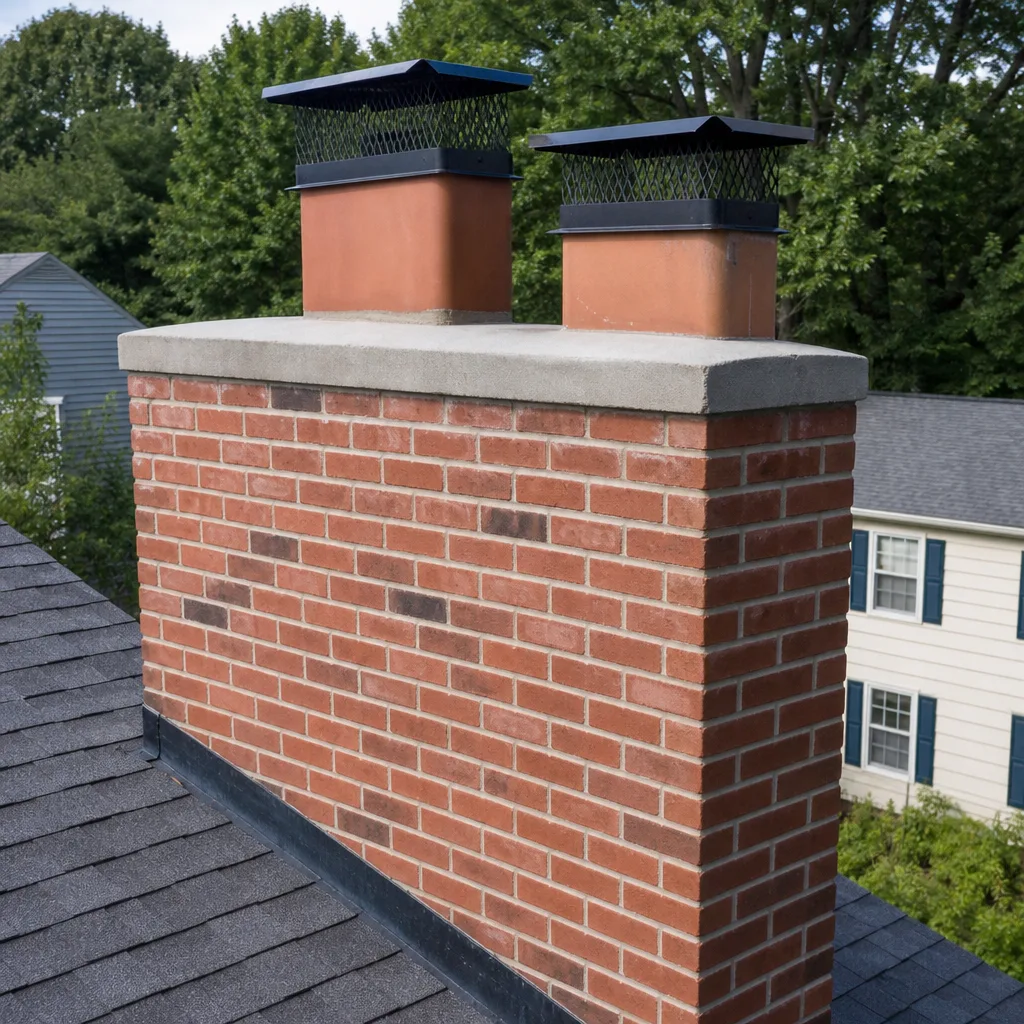
- Chimney cap replacement or installation: $125-$350 installed, depending on the material (galvanized steel, stainless steel, or copper) and the flue size. A missing or rusted cap is one of the most common findings on chimney repair calls in Jamaica, and it is also one of the most legitimately urgent fixes, since a missing cap lets rain and animals into the flue.
- Flue liner repair or replacement: $1,800-$6,500, depending on the liner material, the flue dimensions, and whether the existing liner can be relined with a heat-cured coating or needs a full stainless steel insert. This is the big-ticket item and it is exactly the repair you should never approve without camera images.
- Crown repair or rebuild: $500-$2,200, depending on the present condition and whether the crown needs a full tear-out or a surface repair with a bonding agent. Crown deterioration is the main entry point for water damage in Jamaica’s older masonry chimneys.
- Smoke chamber parging: $800-$1,800, when the smoke chamber walls have degraded and need to be smoothed and sealed. This is a code compliance item that an inspector might flag, and it also improves draft.
These ranges reflect what we see on written estimates across Jamaica in 2026, not national averages. If a quote lands far outside these numbers, ask the contractor to explain the delta in writing, tied to the specific condition of your flue. A legitimate contractor will walk you through the line items without hesitation. That is the standard any honest sweep should meet, and it is exactly how a written quote protects you: the numbers are on the page before anyone touches your roof.
In Jamaica specifically, expect the price to skew toward the upper half of these ranges if you have a three-story prewar rowhouse with a slate roof and difficult access, and toward the lower half if you have a one-story frame house with an easy ladder pitch. Slope, height, and roof material are real cost drivers. Any contractor whose price does not vary with those factors is probably not actually looking at your roof before quoting.
One more thing: never pay a deposit for a standard chimney cleaning. A sweep is not a construction project. Any contractor in Jamaica who asks for a deposit before showing up for a $279 cleaning is telling you something about their cash flow that you do not want to be a part of. The fireplace services industry in Jamaica has plenty of reputable companies that do not take deposits on a basic clean. Written Price Before Any Work Starts is the Haven Standard rule, and it applies to deposits too. No money changes hands until the work is done, the images are in your possession, and the written invoice matches the written quote.
Red Flags Specific to the Jamaica Market
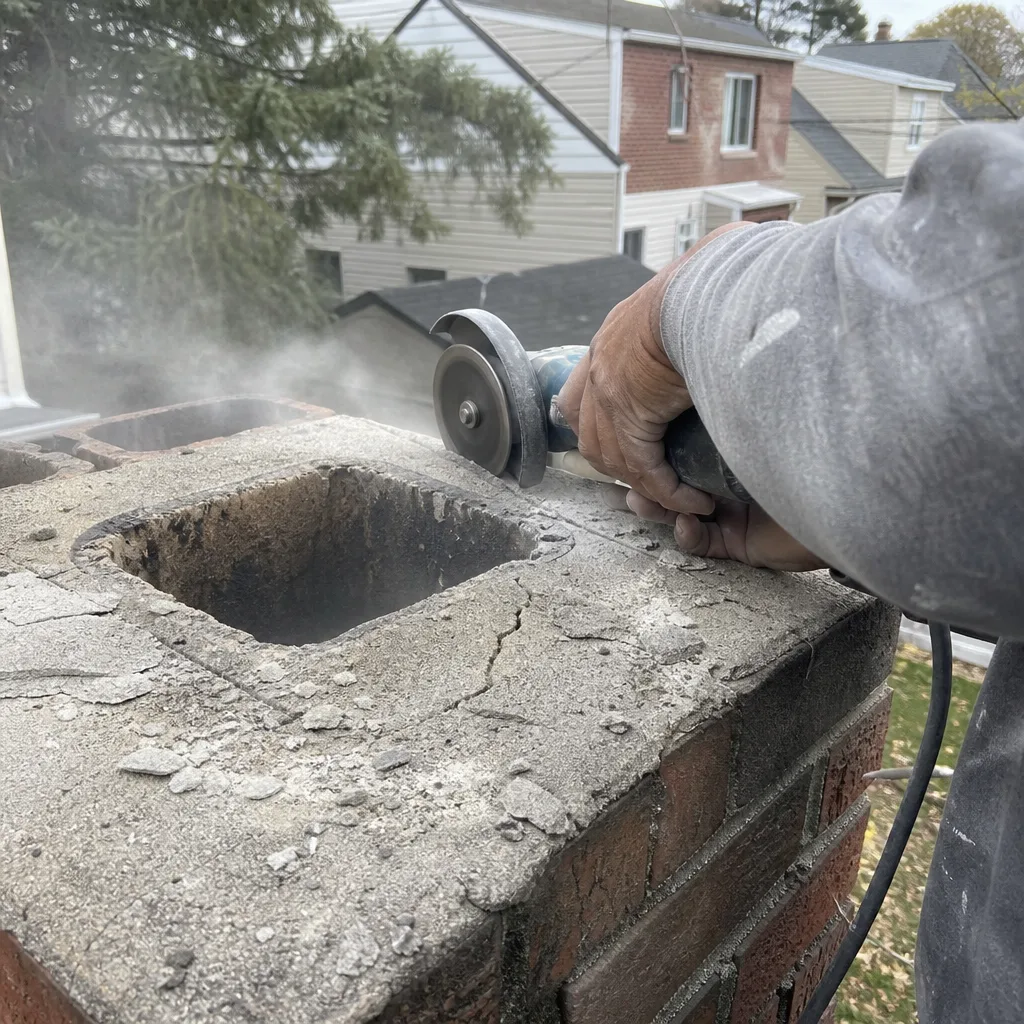
Every market has its local tells, and Jamaica’s are shaped by the density of rowhouse stock, the age of the masonry, and the number of companies working the area from outside the immediate neighborhood. Here are the red flags we have watched homeowners trip over for sixteen years.
- Door-hanger pricing. A flyer left on your doorknob advertising “$89 chimney cleaning, today only.” A legitimate sweep cannot operate at that price in Queens, and the company is planning to make up the difference on repair upsells once they are inside. The $89 is a loss leader for a sales call. In Jamaica, if the price on the door hanger is not a flat written quote with a scope, it is a bait hook.
- Same-day pressure to approve repairs. A technician finishes the sweep and tells you the liner is unsafe and needs replacement, and then says they can do it today but the price goes up if you wait. A legitimate chimney contractor will give you written documentation, tell you the repair can be done on a schedule that suits you, and never use urgency as a sales lever. A chimney flue liner that has been cracked for three years does not become an emergency in the time it takes you to get a second opinion.
- The invoice that appears after the work. This is the most common pattern in the Jamaica market: a verbal scope, a verbal price, work performed, and then an invoice for 30 to 50 percent more than the verbal number. When you object, the contractor points to the “unexpected” condition they found. This is the entire reason Clause 1 of the Haven Standard requires written price and written scope before work starts. If it is not in writing before the ladder goes up, you are negotiating from a position of weakness.
- Free inspection as upsell entry point. The “free inspection” offers in Jamaica frequently function as diagnostic loss leaders. The company sends a technician who finds a problem. The problem is always urgent. The fix is always expensive. A legitimate diagnostic service separates the inspection from the repair quote. If the free inspection comes with a 90-minute sales presentation, it was never an inspection. It was a lead qualification funnel.
- No license number on the page or vehicle. Any legitimate chimney company in Queens displays its DOB license number on its website, its truck, and its marketing materials. If the number is absent, or if the contractor cannot produce it when asked, you are dealing with an unlicensed operator. That is not a “small thing.” That is a business that cannot legally work on your chimney in New York City.
- An online presence that is all flash and no documents. A polished website with stock photos of happy families and glowing testimonials, but no written scope, no price transparency, no named technician credentials, and no warranty language. The company is spending its budget on marketing, not on building the paper trail that protects you. Chimney repair companies in Jamaica that are worth hiring will show you their price structure, their warranty, and their process before you ever pick up the phone.
The 7 Questions to Ask Before Booking
These seven questions, asked in order, will expose every structural weakness in a contractor’s operation before you let them near your roof. Write them down. Call and ask them. How the person on the phone answers tells you more than any review.
- “Can you email me a written scope of work and a flat price before we schedule?” The only acceptable answer is yes. A hesitation, a request to discuss over the phone first, or a “we’ll price it after we see the chimney” is a flag. A flat written price on a defined scope is perfectly possible for a standard chimney cleaning. The contractor’s job is to look at the chimney when they arrive and adjust the written quote if conditions require. But the starting point is always written.
- “Does the price include a camera inspection with a photo record I get to keep?” Again, yes. If there is an upcharge for the camera scan, or if the images are “available on request” but not provided as a standard deliverable, the inspection is not being treated as a service. It is being treated as a sales tool.
- “What is your warranty on the cleaning and on any repair work?” The answer should be specific and time-bound. A one-year warranty on repairs is standard practice for a professional company. A vague “we’ll take care of you” is not a warranty. Ask for the terms in writing.
- “What is your DOB license number, and can you send me a Certificate of Insurance?” A licensed, insured contractor will give you this without friction. A contractor who will not is not just unprofessional, they are working illegally in Queens.
- “Who will be doing the actual work, and are they background-checked?” A real company can name the technician assigned to your job, or at minimum confirm that all technicians are background-checked, uniformed employees, not day-labor subs. The H.A.V.E.N. ‘Verified crews’ requirement exists because this is a real failure point in the market.
- “What is your process if I decline a recommended repair?” A legitimate contractor will say: “We document the finding, give you the images, and you make the call. We may note that a condition requires monitoring, but the decision is yours.” A problematic contractor will apply pressure. Ask this question before scheduling, and listen carefully to the answer.
- “Can I get a free second opinion on any written estimate you give me?” At Level Two, the answer is always yes. We will take a competitor’s written quote and give you our assessment, at no cost. A contractor who is confident in their pricing and their findings will never object to a second opinion. One who objects is afraid of the comparison.
Common Mistakes to Avoid
- Hiring on price alone. The $89 flyer sweep in Jamaica is a well-documented loss leader, and the homeowner who bites is going to hear about a cracked liner within twenty minutes of the technician arriving. Price matters, but a price far below the $199 to $349 Jamaica norm is not a bargain. It is a sales funnel entry point.
- Approving repairs without seeing images. This is the single most expensive mistake homeowners make. A verbal description of “deteriorated liner” or “unsafe flue” is not a diagnosis. If you cannot see the crack in a time-stamped image, you are approving a major repair based on a stranger’s assertion.
- Paying a deposit on a standard cleaning. A chimney sweep is not a custom build. No deposit. If a company asks for one, the company is either undercapitalized or planning to use the deposit as leverage. Either way, the answer is no.
- Forgetting to verify the insurance yourself. A Certificate of Insurance is worthless until you have called the insurer and confirmed the policy is active. Fabricated COIs are more common in the home services sector than any contractor will admit. Ten minutes on the phone with the insurer protects you from a legal and financial mess.
- Skipping the flue liner check on a prewar rowhouse. Jamaica’s prewar brick rowhouses often have original terra cotta liners that have absorbed eight decades of thermal cycling. If your home was built before 1950 and the liner has never been camera-inspected, schedule it. A liner crack in an attached rowhouse is not just a chimney issue. It is a fire spread risk to the entire structure.
- Taking a verbal warranty as binding. “We’ll make it right if anything goes wrong” is not enforceable. “Written warranty, 365 days, on every job, under the Haven Standard, Clause 5” is enforceable. Ask for the warranty in writing, on the company’s letterhead, before the work is scheduled.
- Hiring a company that doesn’t answer the phone with a live person. If you call during business hours and get a voicemail, that is a signal about the company’s operations. H.A.V.E.N. ‘Arrive on schedule’ requires that someone answers. When something goes wrong with a chimney job, you need a human on the other end, not a web form.
When to Call a Professional
A chimney cleaning is not an emergency service, but there are moments when the situation shifts from routine maintenance to a real safety issue. Call a professional if you smell a persistent burning odor from the fireplace even when there is no fire, which signals a creosote buildup that is cycling through hot and cool periods. Call if you see flaking masonry, a rusted or missing cap, or water staining on the ceiling around the chimney chase. Call if you have never had the flue inspected in the last two years, especially if your Jamaica rowhouse shares a wall with a neighbor. And call after any chimney or flue fire that was extinguished, no matter how minor; the thermal shock can crack a liner invisibly. Level Two Chimney Jamaica offers free estimates in Jamaica. Call (516) 240-9612 and ask for a written scope and a written price before you schedule anything.
If you currently have a bird, squirrel, or raccoon living in your chimney, do not try to smoke it out or remove it yourself. Call a professional who can assess the nesting, remove the animal if safe and legal, and install a proper cap to prevent re-entry. This is a job for a chimney contractor with animal-handling protocols, not a DIY weekend.
Frequently Asked Questions
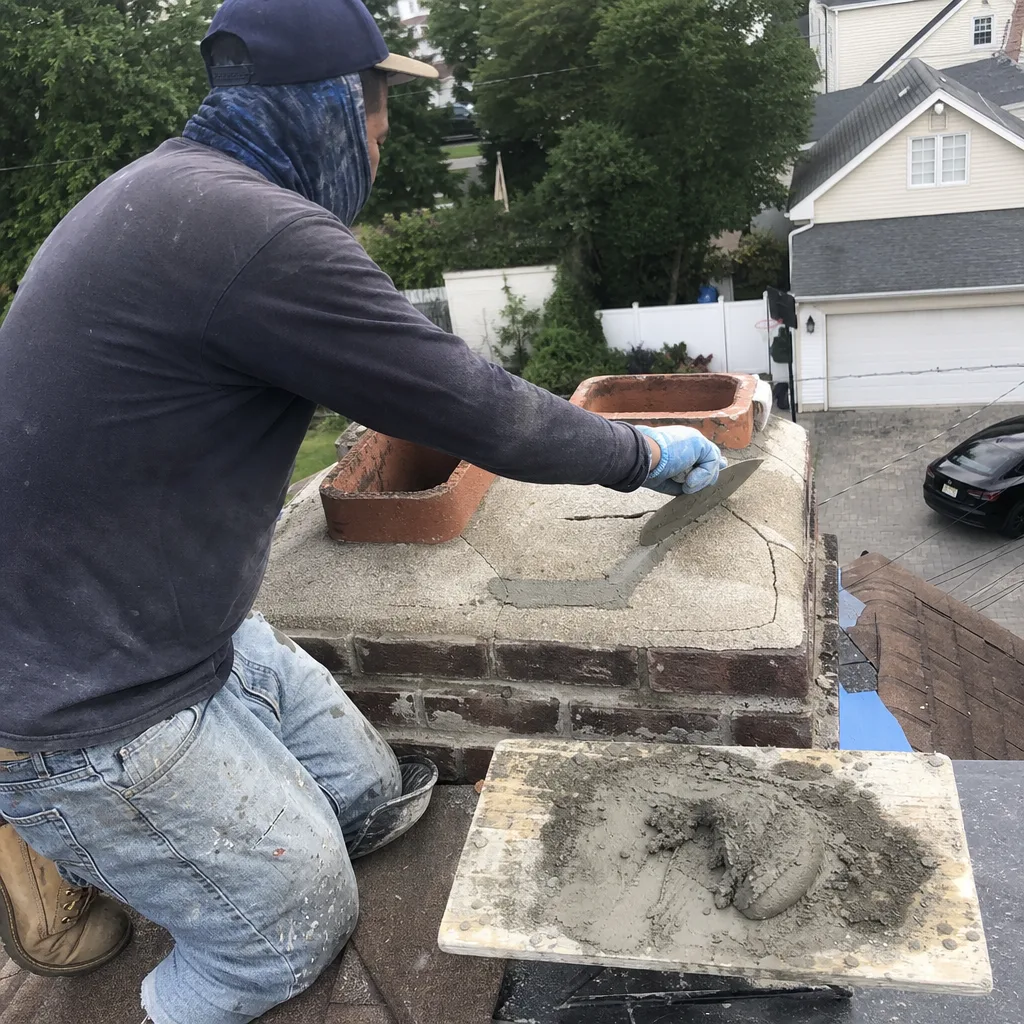
A standard chimney cleaning with a Level 2 camera inspection in Jamaica typically costs between $199 and $349, with the median around $279. Heavy creosote removal, missing caps, and repairs are itemized separately in writing, and a reputable contractor will never charge for these until they have shown you the camera images and given you a written quote for the additional work.
The NFPA 211 standard recommends annual inspection, with cleaning frequency based on usage, but the practical rule in Jamaica is this: if you burn fires more than twice a month from November through March, sweep annually. Our Seasonal Chimney Cleaning Care for Jamaica: Year-Round Homeowner’s Guide covers how to time your visits. If you burn occasionally or on holidays only, every two years is generally sufficient, assuming the camera inspection at each visit shows no concerning buildup. Call (516) 240-9612 for an exact recommendation based on your fuel type and burn pattern; estimates are free.
Not necessarily. Hairline surface cracks in terra cotta liners are common, especially in older Queens homes, and they are often cosmetic rather than structural. A legitimate contractor will show you the crack in a camera image, explain whether it penetrates the liner wall or affects the mortar joints, and give you a written assessment of whether the liner is safe, needs monitoring, or needs replacement. Never approve a liner replacement without seeing the image yourself.
A Level 2 inspection is the standard defined by NFPA 211, requiring a video scan of the full flue interior, roof, attic, and crawlspace access points, typically performed with a camera system that captures the entire flue length from firebox to cap. A Level 2 inspection includes a documented visual record and is the level required when you buy a home, change fuels, or experience a chimney event.
Sweeps are scheduled in advance, and the honest companies in Jamaica will not promise same-day service, because a proper Level 2 camera scan takes time to set up and document. What matters more than speed is the written scope and flat price provided before scheduling, plus the documented photo record you receive after the job, delivered under Clause 4 of the Haven Standard. Call (516) 240-9612 for a specific scheduling window; estimates are free.
With a wood-burning fireplace and regular use, you can expect creosote accumulation to reach Class II or Class III levels within three years, which increases the risk of a chimney fire and makes the next cleaning more labor-intensive and more expensive. The bigger variable is hidden damage: a cracked liner or a failed cap will go unnoticed without an annual camera check, and the repair cost compounds with every freeze-thaw cycle.
Not always. A sweep is trained to remove creosote and inspect the flue. A repair contractor is licensed and equipped to rebuild crowns, install liners, and perform structural masonry work. Many companies do both, but the key is whether they will write the price before starting either. Level Two Chimney Jamaica does both under one roof, with the same written scope, written price, and written warranty on every job, and a Free Second Opinion on any competitor’s written estimate.
It depends on the scope. Cosmetic cleaning and cap installation generally do not require a permit. Structural work, full liner replacement, or any repair touching the smoke chamber or firebox will likely require a NYC DOB permit, and a reputable contractor will handle the permitting for you as part of the written scope. See Chimney Cleaning Permits, Codes & Inspections in NY: What You Need to Know for specifics on when permits apply. If a contractor says “no permit needed” for a full liner job, verify with the DOB before proceeding.
The Bottom Line
Hiring a chimney cleaning contractor in Jamaica comes down to one test, and it can be administered in a single phone call: will they give you a written scope of work, a flat written price, and written warranty terms before anyone goes up on the roof? If the answer is yes, you are probably talking to a legitimate company. If the answer is anything other than yes, you are not. The other pieces, licensing verification, insurance confirmation, camera documentation, all follow from that first structural question. A company that writes things down is a company that can be held to what it wrote. A company that does not is a company that never intended to be held to anything. This guide exists so that when the next flyer lands on your doorknob in Jamaica, you will know exactly which of those two companies you are dealing with before they ever set foot in your house.
Written by Corrine Halstead, Owner at Level Two Chimney Jamaica, serving Jamaica since 2009.